
Lightweight vs. Full-Size Stroller: Which One Is Better for Everyday Use?
Choosing the right stroller is one of the most important decisions parents make when preparing for a new baby. From daily walks and shopping trips to family outings and holidays, a stroller becomes an essential part of everyday parenting. However, with so many designs available, deciding between a lightweight stroller and a full-size stroller can be confusing.
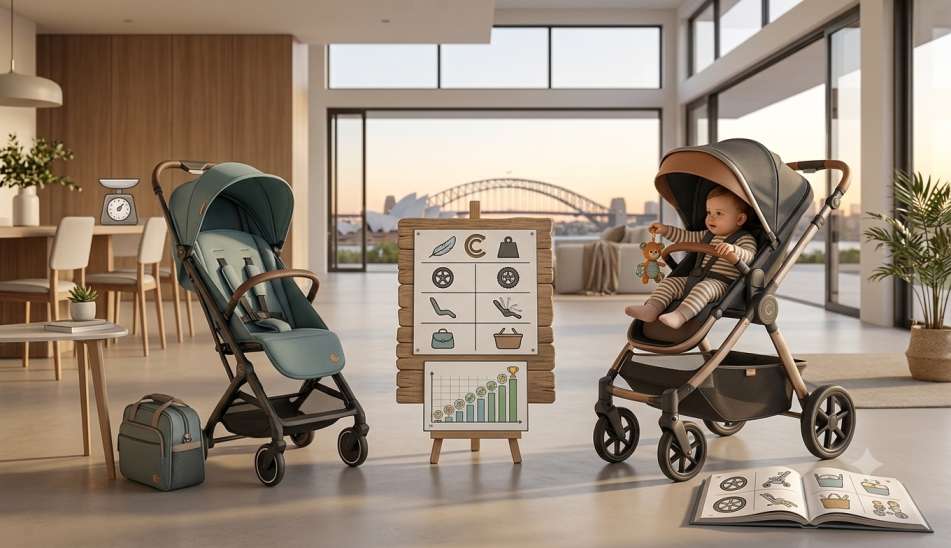
Both options are designed to make travelling with a baby easier, but they offer different advantages. A lightweight stroller is generally appreciated for its portability, compact folding design and easy handling. A full-size stroller, on the other hand, often provides additional storage, more seating adjustments and a range of comfort features.
But which one is better for everyday use? Is a lightweight stroller practical enough for daily outings, or does a full-size stroller offer better comfort and support for growing babies?
In this guide, we will compare both stroller types, explore their advantages and disadvantages, discuss important safety features and help parents understand which option best suits their lifestyle.
1. What Is a Lightweight Stroller?
A lightweight stroller is designed to make travelling with a baby or toddler easier by reducing the overall weight and size of the stroller. Unlike larger traditional models, these strollers generally feature a compact frame, smaller wheels and a convenient folding mechanism.
They are particularly popular among parents who frequently travel, use public transport, visit shopping centres or need to carry their stroller in and out of a vehicle.
The main purpose of a lightweight stroller is to provide everyday convenience without requiring parents to handle a bulky piece of equipment.
Key Features of a Lightweight Stroller
- Compact and Lightweight Frame
One of the biggest advantages of a lightweight stroller is its reduced weight. A lighter frame can make it easier to lift, carry and manoeuvre, especially when parents are travelling alone with their child.
- Easy Folding Mechanism
Many lightweight strollers feature simple folding systems that allow parents to collapse the stroller quickly. Some models can be folded using one hand, although the exact mechanism varies by manufacturer.
- Space-Saving Design
A compact folding design makes lightweight strollers easier to store in car boots, cupboards and other small spaces.
- Easy Manoeuvrability
Lightweight strollers are often easier to steer through shopping centres, narrow walkways and crowded areas. Their smaller frames can be useful when navigating places where space is limited.
- Convenient for Travel
Parents who regularly travel by car, train or other forms of transport may appreciate a stroller that is easier to fold and carry.
Advantages of a Lightweight Stroller
- Easy to lift and carry.
- Convenient for everyday outings.
- Requires less storage space.
- Often easier to manoeuvre in crowded areas.
- Suitable for families who travel frequently.
- Generally quicker to fold and unfold.
- Can be practical for older babies and toddlers who can sit independently.
Disadvantages of a Lightweight Stroller
- May offer less storage space than full-size models.
- Smaller wheels may be less suitable for rough surfaces.
- Some models have fewer reclining and seating adjustments.
- May provide less cushioning or suspension.
- Can have a lower weight capacity than certain full-size alternatives.
- Not every lightweight stroller is suitable for newborns.
A lightweight stroller is an excellent option for parents who value portability and convenience. However, it is important to check the age suitability, reclining positions and safety features before purchasing.
2. What Is a Full-Size Stroller?
A full-size stroller is a larger and generally more feature-rich option designed to provide additional comfort, support and functionality.
These strollers are often built with stronger frames, larger wheels, more generous storage baskets and adjustable seating arrangements. Depending on the model, they may also include reversible seats, adjustable handles, suspension systems and compatibility with approved infant capsules or bassinets.
Full-size strollers are particularly popular among parents who want a versatile option for everyday family use.
Key Features of a Full-Size Stroller
- Larger and More Supportive Seating
Full-size strollers often feature wider seats, padded cushions and additional back support. These features can help provide a comfortable seating environment for babies and toddlers.
- Adjustable Reclining Positions
Many models allow parents to adjust the backrest to different positions. Certain models also offer a suitable flat or near-flat configuration for newborn use, subject to the manufacturer’s instructions.
- Larger Wheels
Full-size strollers often feature larger wheels that can help provide a smoother ride over different surfaces, depending on the wheel design and suspension system.
- Spacious Storage Basket
Parents often carry nappies, wipes, bottles, spare clothing, toys and other essentials when travelling with a baby. A larger storage basket can make organising these items easier.
- Additional Accessories
Some full-size strollers support accessories such as rain covers, sun canopies, infant capsules and approved bassinets.
Advantages of Full-Size Strollers
- Often provide more generous seating space.
- May offer additional reclining positions.
- Frequently include larger storage baskets.
- Larger wheels can improve handling on uneven surfaces.
- May provide additional suspension and cushioning.
- Some models can be used with newborn-compatible attachments.
- Often offer more adjustment options as the child grows.
Disadvantages of Full-Size Strollers
- Generally heavier than lightweight alternatives.
- Can require more storage space.
- May be difficult to lift into smaller vehicles.
- Can be less convenient on public transport.
- Some models take longer to fold and unfold.
- May be more expensive because of their additional features.
A full-size stroller can be a practical choice for parents who prioritise comfort, storage and versatility over portability.
3. Lightweight vs. Full-Size Stroller: Understanding the Main Differences
Although both stroller types serve the same basic purpose, their construction and everyday functionality can differ significantly.
Understanding these differences will help parents choose a model that suits their routine.
A. Weight and Portability
Weight is one of the most noticeable differences between lightweight and full-size strollers.
A lightweight stroller is generally easier to lift, carry and transport. This can be particularly helpful when parents need to place it inside a car, carry it up stairs or use public transport.
Full-size strollers are usually heavier because they may include larger frames, wheels, seating components and additional accessories.
For parents who frequently travel alone with their baby, handling a heavy stroller can become inconvenient.
Winner: Lightweight stroller
If portability is your main priority, a lightweight stroller is generally the more practical choice.
B. Comfort and Seating Support
Comfort is particularly important because babies and toddlers may spend considerable time sitting in their strollers during outings.
Full-size strollers often provide wider seats, additional padding, adjustable backrests and more generous footrests.
Lightweight strollers may have simpler seating arrangements to keep the overall design compact. However, many modern lightweight models still provide padded seats and adjustable recline positions.
Parents should consider their child’s age, development and the duration of typical outings when comparing comfort features.
Winner: Full-size stroller
Full-size models often provide more seating space and adjustment options, although comfort ultimately depends on the individual design.
C. Storage Capacity
Parents rarely travel with just a baby. They often carry several everyday essentials, including:
- Nappies and baby wipes.
- Feeding bottles and snacks.
- Spare clothing.
- Small toys and books.
- Baby blankets.
- Personal belongings.
Full-size strollers commonly include larger under-seat storage baskets, making it easier to carry these items.
Lightweight strollers usually have smaller storage baskets because their frames are designed to remain compact.
If you regularly go shopping or take longer family outings, additional storage can make a noticeable difference.
Winner: Full-size stroller
A full-size stroller is generally more suitable for parents who need additional storage capacity.
D. Folding and Storage
A stroller should not only be comfortable for your child but also convenient for your home and vehicle.
Lightweight strollers are often designed with compact folding mechanisms. Some models can stand independently after folding, making them easier to store.
Full-size strollers may take up more room, particularly when additional attachments are included.
However, some full-size models also offer convenient folding systems, so parents should compare folded dimensions rather than relying only on the stroller category.
Winner: Lightweight stroller
Lightweight models generally offer an advantage when storage space is limited.
E. Manoeuvrability and Steering
Moving through crowded places with a stroller can sometimes be challenging.
Lightweight models are often easier to turn and steer through narrow supermarket aisles, shopping centres and busy pedestrian areas.
Full-size models may have larger wheels and more advanced suspension systems, which can help when navigating uneven pavements and outdoor paths.
The actual steering experience depends on wheel design, swivel functionality, frame balance and the stroller’s overall construction.
Winner: Depends on the environment
Lightweight strollers can be more convenient in crowded urban areas, while some full-size models offer better handling on uneven surfaces.
F. Durability and Construction
Durability is another important factor when choosing a stroller for everyday use.
Full-size models often feature larger frames and components designed for regular use. Some also have more substantial wheel and suspension systems.
Lightweight models are designed to reduce weight without compromising essential functionality. Their durability depends on frame materials, construction quality and maintenance.
Rather than assuming that a heavier stroller is always stronger, check the manufacturer’s specifications, product testing information and warranty.
Winner: Depends on product quality
Both types can be durable when manufactured using quality materials and maintained correctly.
G. Price and Overall Value
Price is often one of the first things parents consider when comparing stroller options.
Lightweight strollers may be more affordable because they generally have simpler designs and fewer additional components.
Full-size models can cost more when they include adjustable seating, suspension, larger storage baskets and compatibility with other baby travel products.
However, a higher price does not automatically mean a better stroller.
Parents should compare the features they will actually use, the product’s expected lifespan, its weight capacity and the cost of additional accessories.
Winner: Depends on your budget and requirements
A lightweight stroller may offer better value for simple everyday outings, while a full-size model may justify its price through additional functionality.
4. Which Stroller Is Better for Different Everyday Activities?
The best stroller depends on how you plan to use it.
A stroller that works perfectly for a short shopping trip may not be the most suitable option for a long family outing.
Let’s explore which type may work better in different situations.
A. Shopping and Visiting Shopping Centres
Shopping centres can become crowded, particularly during weekends and holidays.
Parents need a stroller that can move through narrow aisles, turn easily and fit comfortably around shops.
A lightweight stroller can make these activities easier because of its compact frame and manoeuvrability.
However, if you regularly carry shopping bags and baby essentials, a full-size stroller with a larger basket may be more convenient.
Recommended choice: Lightweight stroller for easier movement; full-size stroller for additional storage.
B. Daily Walks Around the Neighbourhood
For short walks around your neighbourhood, a lightweight stroller can be a convenient option.
Its compact design makes it easier to take out of storage and use for everyday trips.
However, if your usual walking route includes uneven footpaths, grass or gravel, a full-size stroller with suitable wheels and suspension may provide a more comfortable ride.
Recommended choice: Lightweight for smooth urban paths; full-size for more demanding surfaces.
C. Travelling by Car
Parents who regularly travel by car should pay attention to the stroller’s folded dimensions and weight.
A lightweight stroller may fit more conveniently into a small car boot and be easier to lift in and out.
Full-size models may require additional boot space, particularly when the seat and attachments cannot be folded together.
Before buying, measure your vehicle’s available storage area and compare it with the stroller’s folded dimensions.
Recommended choice: Lightweight stroller for smaller vehicles and frequent car travel.
D. Using Public Transport
Buses, trains and other public transport services can involve steps, narrow entrances and limited storage areas.
Carrying a bulky stroller while managing a baby can be challenging.
A lightweight stroller may be easier to fold and handle when travelling on public transport.
However, check the transport operator’s rules regarding prams and strollers, particularly during peak hours.
Recommended choice: Lightweight stroller for easier handling and portability.
E. Long Family Outings
For longer outings, comfort and storage become increasingly important.
Parents may need to carry extra clothing, feeding supplies and other essentials. Children may also benefit from a suitable reclining position and supportive seating.
A full-size stroller may be more practical in these situations because of its additional storage and seating features.
Recommended choice: Full-size stroller for extended outings, provided its size and handling suit the destination.
F. Holidays and Air Travel
Travelling with children often requires additional planning.
Parents need to consider luggage space, airport movement, transport transfers and accommodation storage.
A lightweight stroller may be easier to carry through airports and fit into a vehicle during holidays.
Some models are designed specifically for travel and may have particularly compact folding dimensions.
However, airlines have different requirements for cabin baggage and gate-checking strollers. Always confirm the airline’s current rules before travelling.
Recommended choice: Lightweight stroller for families who travel frequently.
5. Is a Lightweight Stroller Suitable for Newborn Babies?
This is one of the most important questions parents should consider before purchasing a lightweight stroller.
Not every lightweight stroller is suitable for newborns.
Many compact models are designed for older babies who can maintain an appropriate upright sitting position. Newborns require more support because their head, neck and body control are still developing.
For the early months, parents should choose a stroller that is specifically approved for newborn use.
Depending on the design, this may include:
- A fully flat or appropriately reclined newborn-compatible seat.
- An approved carrycot or bassinet attachment.
- A compatible infant capsule used according to its instructions.
- Suitable head and body support.
- A secure harness and stable frame.
Parents should never assume that a stroller is suitable from birth simply because its seat reclines.
Always check the manufacturer’s age and weight recommendations and instructions for newborn use.
In Australia, the ACCC advises that babies under six months should not be placed in an upright seated position in a stroller. You can also review the Australian pram and stroller safety guide before making a purchase.
If you are still exploring suitable options, our detailed guide on choosing the right stroller for infant can help you understand important features, newborn suitability and safety considerations before buying.
6. Important Features to Look for When Buying a Lightweight Stroller
If you decide that a lightweight stroller is the right choice, do not focus only on its weight.
A good stroller should balance portability, comfort, durability and safety.
Here are some important features to consider.
1. Lightweight but Sturdy Frame
The frame should be easy to lift without feeling unstable.
Check the materials, construction and locking mechanisms. A stroller should remain stable during normal use and should not feel loose or excessively wobbly.
2. Secure Five-Point Harness
A five-point harness helps secure the child around the shoulders, waist and between the legs.
It is an important safety feature that should be used every time your baby travels in the stroller.
Check that the straps can be adjusted as your child grows.
3. Adjustable Reclining Seat
An adjustable backrest allows parents to select a suitable seating position according to the child’s age and the manufacturer’s instructions.
For newborns, confirm that the stroller offers an approved configuration suitable for their developmental needs.
4. Reliable Braking System
A stroller should have an effective parking brake that prevents it from rolling when stationary.
Check how easily the brake can be activated and released.
5. Easy Folding Mechanism
A convenient folding mechanism can make everyday outings much easier.
If possible, test whether you can fold and unfold the stroller without difficulty.
Also check whether the folded stroller is easy to carry and store.
6. Comfortable Seat Padding
Look for suitable seat padding, a supportive backrest and a comfortable footrest.
The seating area should provide appropriate support without restricting the child’s movement unnecessarily.
7. Sun Canopy
A good sun canopy can provide shade and help protect your child from direct sunlight.
Check its coverage and whether it can be adjusted according to the weather.
8. Suitable Wheel Design
Wheel size and material can affect steering and handling.
Swivel front wheels may make the stroller easier to manoeuvre in crowded places, while larger wheels can be useful on certain uneven surfaces.
9. Practical Storage Basket
Even lightweight strollers should provide some space for essential items.
Check the basket’s size, accessibility and maximum permitted load.
Never overload the stroller or hang heavy bags from its handles.
10. Suitable Weight Capacity
Always check the manufacturer’s maximum child weight and recommended age range.
A lightweight stroller should remain appropriate for your child’s size throughout its intended period of use.
7. Safety Tips Every Parent Should Follow When Using a Stroller
Whether you choose a lightweight or full-size stroller, safety should always come first.
A stroller is designed to transport a child, but incorrect use can create risks such as falls, tipping, entrapment and suffocation.
Here are some important safety practices for parents.
Always Secure the Harness
Fasten the safety harness before every journey and adjust it so that it fits your child correctly.
Use the Parking Brake
Apply the brakes whenever you stop, even if you are only stationary for a short period.
Use the Wrist Tether Strap
Keep the tether strap around your wrist while operating the stroller. This can help prevent it from rolling away.
Avoid Overloading the Handles
Do not hang shopping bags, handbags or other heavy items from the stroller handles. Extra weight can affect stability and increase the risk of tipping.
Check Folding Locks
Before placing your child in the stroller, ensure that the frame is fully opened and all locking mechanisms are engaged.
Supervise Your Child
Never leave a baby or toddler unattended in a stroller.
Follow Newborn Positioning Guidelines
Do not place a young baby in an upright position unless the manufacturer confirms that the configuration is suitable for the child’s age and development.
Never Use a Stroller as a Regular Sleeping Space
Strollers are not designed to replace a safe sleep environment. If your baby falls asleep during an outing, follow the relevant safety guidance and move them to an appropriate flat, firm and level sleep surface as soon as possible.
Check the Stroller Regularly
Inspect the wheels, brakes, harness, frame and fabric for signs of damage or wear.
For more detailed guidance, refer to the ACCC’s official pram and stroller safety recommendations.
8. Common Mistakes Parents Make When Choosing a Stroller
Buying a stroller can feel overwhelming because there are so many models, features and designs available.
However, avoiding a few common mistakes can make the decision much easier.
Choosing Only Based on Price
A low-cost stroller may look attractive, but it is important to consider its safety features, comfort, durability and suitability for your child’s age.
Ignoring the Stroller’s Weight
Parents sometimes focus on the stroller’s appearance and forget to check how much it weighs.
If you regularly carry the stroller upstairs or lift it into a vehicle, its weight can make a significant difference to everyday convenience.
Forgetting to Check Folded Dimensions
A stroller may appear compact when displayed in a store but take up considerable room after folding.
Always check its folded dimensions before purchasing.
Buying Without Considering the Child’s Age
Not all strollers are suitable from birth.
Choosing a model without checking its newborn suitability can result in an unsuitable seating position.
Overlooking Wheel Quality
Small wheels may work well on smooth shopping centre floors but may be less practical on rough paths.
Consider the surfaces you regularly travel across.
Ignoring Storage Requirements
A stroller with limited basket space may become inconvenient if you frequently carry feeding supplies, nappies and spare clothing.
Assuming More Features Always Mean Better Quality
Additional features can be useful, but they do not automatically make a stroller the right choice.
Focus on the functions that genuinely support your everyday routine.
9. Lightweight vs. Full-Size Stroller: Which One Should You Choose?
By now, it should be clear that both stroller types offer different benefits.
The best option depends on your lifestyle, your child’s age and the places you regularly visit.
Choose a Lightweight Stroller If:
- You frequently travel by car or public transport.
- You need a stroller that is easy to lift and carry.
- You live in an apartment with limited storage space.
- You regularly visit shopping centres.
- You prefer a compact folding design.
- Your child is within the stroller’s recommended age and weight range.
Choose a Full-Size Stroller If:
- You prioritise additional seating comfort.
- You frequently go on longer outings.
- You need a larger storage basket.
- You regularly travel over uneven paths.
- You prefer additional adjustment options.
- You want a model with compatible newborn attachments.
What If You Want Both Convenience and Comfort?
Some modern stroller designs attempt to combine the advantages of both categories.
For example, certain compact full-featured strollers offer adjustable seats, practical storage and easy folding without being as bulky as traditional full-size models.
If you are unsure, compare different models based on your actual requirements rather than choosing based on category alone.
10. Can You Use Both a Lightweight and Full-Size Stroller?
Yes. Some families find that owning two different stroller types provides greater convenience.
A full-size stroller can be used for everyday walks, longer outings and situations where additional storage is useful.
A lightweight stroller can be kept for holidays, shopping trips and occasions when portability is more important.
However, buying two strollers is not necessary for every family.
If your budget is limited or your storage space is restricted, choosing one versatile model that meets most of your requirements may be the better decision.
Before purchasing a second stroller, consider how frequently you would use it and whether its additional convenience justifies the cost.
11. How to Maintain Your Stroller for Long-Term Use
Regular maintenance can help keep your stroller in good working condition.
Regardless of whether you own a lightweight or full-size model, a few simple habits can make a difference.
Clean the Fabric Regularly
Food crumbs, dust and everyday dirt can collect on the seat and canopy. Follow the manufacturer’s washing and cleaning instructions.
Check the Wheels
Remove accumulated dirt, hair and small debris from the wheels. Check for visible damage and ensure that they rotate correctly.
Inspect the Brakes
Test the parking brake regularly to confirm that it engages and releases properly.
Check the Harness
Look for frayed straps, loose stitching and damaged buckles. Replace damaged components using manufacturer-approved parts.
Keep Folding Mechanisms Clean
Dust and debris can collect around hinges and locking points. Keep these areas clean according to the manufacturer’s instructions.
Store It Properly
When not in use, store the stroller in a dry and suitable location. Avoid placing heavy objects on top of it.
Follow the Manufacturer’s Instructions
Do not apply lubricants, cleaning chemicals or replacement components unless they are recommended by the manufacturer.
12. Final Verdict: Is a Lightweight or Full-Size Stroller Better for Everyday Use?
So, which stroller is the better choice for everyday use?
The answer depends on what matters most to your family.
A lightweight stroller is an excellent choice for parents who value portability, compact storage and easy manoeuvrability. It can make shopping trips, short walks and travel more convenient, especially when parents frequently need to lift or fold their stroller.
A full-size stroller may be more suitable for families who prioritise additional seating comfort, storage capacity and versatility. Its larger frame and additional features can be helpful for longer outings and different outdoor environments.
Neither option is automatically better for every family.
If you frequently travel and want something simple to carry, a lightweight stroller may be the right investment. If you regularly take longer walks and need more storage and adjustment options, a full-size model may be more practical.
Most importantly, always choose a stroller that is appropriate for your child’s age, size and developmental stage. Check the safety features, manufacturer recommendations and relevant Australian product safety requirements before purchasing.
The right stroller should make everyday outings easier while providing a suitable and secure place for your little one to travel.
Frequently Asked Questions (FAQs)
1. Is a lightweight stroller better than a full-size stroller?
A lightweight stroller is generally better for portability, compact storage and frequent travel. A full-size stroller may be better for additional comfort, storage capacity and longer outings. The best option depends on your family’s needs.
2. At what age can a baby use a lightweight stroller?
It depends on the individual stroller. Some lightweight models are approved for newborns when used with a suitable flat-reclining seat or compatible bassinet, while others are intended for babies who can sit upright independently. Always follow the manufacturer’s age and development guidelines.
3. Are lightweight strollers suitable for everyday use?
Yes. A good-quality lightweight stroller can be practical for everyday outings, shopping trips and neighbourhood walks. Check its weight capacity, wheel design, comfort and safety features before buying.
4. Do full-size strollers provide better comfort?
Many full-size strollers offer wider seating, additional padding, adjustable reclining positions and larger wheels. However, comfort depends on the individual model and how well it suits your child’s size and age.
5. Can a lightweight stroller be used for newborn babies?
Some lightweight strollers are suitable from birth, but not all. Choose a model specifically approved for newborn use and check whether it offers an appropriate reclining position or compatible bassinet.