
Do Baby Walkers Help Babies Learn to Walk? Facts for Parents
From rolling over and sitting independently to crawling, standing and taking those first steps, every stage brings something special. During this period, many parents consider buying a baby walker, hoping it will help their little one develop walking skills more quickly.
Baby walkers are often marketed as entertaining products that allow babies to move around before they can walk independently. However, an important question remains: do baby walkers actually help babies learn to walk, or could they interfere with natural development?
The answer may surprise you. Health and child-safety authorities in Australia do not recommend wheeled baby walkers because they can increase the risk of serious injuries and may delay the development of walking skills. According to Pregnancy, Birth and Baby, babies develop walking skills through natural movement, practice and exploration rather than using a wheeled walker.
1. What Is a Baby Walker?
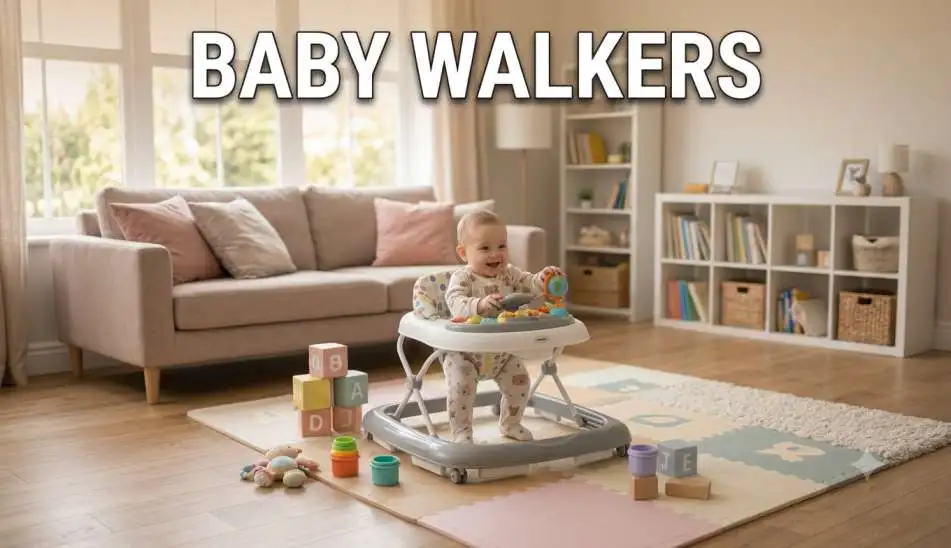
A traditional walker is a wheeled device with a suspended seat that allows a baby to sit upright while their feet touch the floor. Many models include a plastic tray, colourful toys, music or other entertainment features.
When a baby pushes against the floor with their feet, the walker moves around the room. This can give the impression that the baby is learning to walk because they appear to move from one place to another.
However, moving around in a wheeled walker is different from learning to walk independently. A baby who is not yet able to stand or balance alone can move in a walker without developing the same coordination, postural control and balance needed for independent steps.
It is also important to distinguish between a wheeled baby walker and a stationary activity centre. A stationary activity centre does not roll across the floor, although it should still be used appropriately and under supervision. A push-along walking toy is different again because a child uses their own standing balance while holding and moving it.
Understanding these differences helps parents make more informed decisions about baby equipment.
2. Do Baby Walkers Help Babies Learn to Walk?
No. Wheeled baby walkers do not help babies learn to walk earlier. In fact, Australian child-health guidance warns that they may delay the development of important movement skills.
Learning to walk involves much more than moving the legs. Babies need to strengthen their muscles, develop balance, coordinate their movements and learn how to shift their weight from one foot to the other.
These abilities develop gradually through everyday activities such as rolling, sitting, crawling, pulling up to stand and moving along stable furniture.
When a baby sits inside a wheeled walker, the device supports their body while allowing them to move around. This does not provide the same experience as balancing their body independently or practising the movements involved in standing and walking.
According to the Western Australian Child and Adolescent Health Service, walkers do not help babies walk earlier and may delay their progress.
Parents should therefore avoid viewing a walker as a developmental shortcut. Babies benefit more from opportunities to move freely in a safe environment and practise skills when they are developmentally ready.
3. How Do Babies Naturally Learn to Walk?
Walking is a gradual developmental process. Every baby follows an individual timeline, and some children reach milestones earlier or later than others.
Rather than relying on a walker, parents can support development by providing safe opportunities for movement and exploration.
Rolling and moving on the floor
Early movement helps babies become aware of their bodies and develop coordination. Rolling, reaching for toys and changing positions encourage them to use different muscle groups.
Sitting independently
Sitting helps babies develop trunk strength and control. These abilities are important because walking requires a child to keep their body stable while moving their legs.
Crawling and exploring
Not every baby crawls in the same way, and some skip traditional crawling altogether. However, opportunities to move around on the floor help babies explore their surroundings, practise coordination and develop strength.
Pulling up to stand
As babies become stronger, they may begin pulling themselves up using stable furniture or another suitable support. This allows them to practise supporting their own body weight.
Cruising along furniture
Cruising occurs when a baby moves sideways while holding onto stable furniture.
Taking independent steps
Eventually, some babies begin standing briefly without support before taking their first independent steps. Others may move through these stages differently.
According to Pregnancy, Birth and Baby, babies commonly begin walking independently between approximately 10 and 18 months.
The important thing is to give your baby time, encouragement and safe opportunities to practise rather than trying to accelerate the process with equipment.
4. Why Are Baby Walkers Not Recommended?
Although a walker may look convenient, there are several important safety and developmental concerns parents should understand.
Increased risk of accidents
Wheeled walkers allow babies to move quickly around the home, sometimes before they have developed the awareness or coordination needed to avoid hazards.
A baby may roll into furniture, tip over on an uneven surface or reach an area that would otherwise be inaccessible. Even when a parent is nearby, a sudden movement can happen faster than an adult can react.
Falls and head injuries
Stairs, steps and changes in floor level present serious hazards. A walker can move towards a staircase before a caregiver has time to intervene.
Falls may result in significant injuries, including head injuries and fractures. Safety features such as braking mechanisms do not remove every possible risk.
Burns and scalds
A baby sitting in a walker may be able to reach higher surfaces than they could reach independently.
This can bring them closer to hot drinks, kettle cords, cookware, heaters or other dangerous objects. Pulling an object down from a table or bench could cause serious burns or scalds.
Access to dangerous household items
A walker can give a baby greater mobility and reach, potentially bringing them closer to medicines, cleaning products, electrical items and other hazards.
A room that appears safe for a baby playing on the floor may not be safe when the baby can move around in a wheeled device.
Possible delays in motor development
Babies learn movement skills by practising them. Time spent in a walker may reduce opportunities for floor play, crawling, pulling up to stand and developing independent balance.
Health authorities also warn that walkers may encourage babies to move on their toes rather than practise the natural weight-bearing and balance patterns needed for independent walking.
5. What Can Parents Use Instead of a Baby Walker?
The good news is that babies do not need a wheeled walker to develop walking skills. Simple activities and suitable play equipment can create opportunities for movement while allowing children to practise at their own pace.
Supervised floor play
A clean, uncluttered floor area provides room for babies to roll, stretch, reach, sit and move around.
Place age-appropriate toys within reach to encourage your baby to turn, reach or move towards them. Always supervise play and ensure the area is free from small objects and other hazards.
Tummy time when your baby is awake
For babies who are not yet mobile, supervised tummy time while awake helps build strength and movement control.
Start with short sessions that suit your baby’s age and comfort, increasing them gradually as your baby becomes more comfortable. Always place your baby on their back for sleep.
A suitable stationary activity centre
A stationary activity centre may provide a place for short periods of supported play, depending on the design and your baby’s developmental abilities.
Choose equipment that is appropriate for your baby’s size and stage. Follow the manufacturer’s instructions, supervise your baby and avoid using the product as a replacement for regular floor play.
A stationary activity centre should not be confused with a wheeled baby walker. Parents exploring other options for supervised play can also browse a baby bouncer, ensuring that any product is suitable for their baby’s age and used according to its safety instructions. A bouncer is not a walking aid and should never replace supervised floor play.
Pulling up at stable furniture
When your baby is ready to pull up, a stable, securely positioned support can provide an opportunity to practise standing.
Make sure furniture cannot tip over and remove nearby objects that could fall or cause injury. Never encourage your baby to stand on unstable chairs, lightweight tables or furniture with sharp edges.
Supported walking with an adult
When your baby begins showing interest in standing and stepping, you can sit nearby, offer encouragement and let them move towards you at their own pace.
Avoid pulling your baby by the hands or forcing them to walk before they are ready. If you have concerns about balance, strength or movement, ask your child health nurse or doctor for personalised advice.
6. When Should a Baby Start Learning to Walk?
Parents often wonder whether their baby is taking too long to walk or whether they should introduce a baby walker at a particular age.
There is no single age when every baby should begin walking. Development varies, and babies may reach milestones in different sequences.
Some babies start walking independently around 10 to 12 months, while others take longer. Walking at a later point within the usual developmental range does not automatically mean something is wrong.
Instead of focusing only on age, observe how your baby moves and develops over time. Are they becoming more confident with sitting, reaching, standing or moving around? Are they gradually gaining new skills?
Avoid comparing your baby with siblings, friends’ children or social media milestones. A walker will not reliably speed up development.
If your baby is not progressing as expected, seems unusually stiff or floppy, loses a skill they previously had, or you have other developmental concerns, speak with your GP, child health nurse or paediatrician. They can assess your baby’s individual needs and advise whether further evaluation is appropriate.
7. How Can You Encourage Your Baby to Walk Safely?
You can support your baby’s development through small, everyday activities that make movement enjoyable.
- Create a safe play area: Keep floors clear and use suitable safety gates to restrict access to stairs and other hazardous spaces.
- Encourage reaching: Place a favourite toy nearby to motivate your baby to stretch, turn or move towards it.
- Allow plenty of movement time: Provide opportunities for supervised floor play rather than keeping your baby in seats or other equipment for extended periods.
- Offer encouragement: Smile, talk and celebrate new attempts without putting pressure on your baby to achieve a milestone.
- Secure furniture: Anchor furniture that could tip and keep hot drinks, cords, medicines and cleaning products out of reach.
- Choose suitable footwear: Babies learning to walk indoors generally do not need shoes. Once they begin walking outdoors, suitable footwear can help protect their feet.
- Follow your baby’s pace: Let your child practise new movements when they are ready instead of trying to make them stand or walk before they have developed the necessary skills.
When planning family outings, parents may also find it useful to explore a suitable stroller for baby for everyday travel. A stroller serves a different purpose from a walker and should not be used to teach a baby to walk.
Conclusion
So, do baby walkers help babies learn to walk? The evidence-based answer is no. Although wheeled walkers may make it appear that a baby is moving independently, they do not teach the balance, coordination and control required for walking. They can also expose babies to preventable injuries and may interfere with the development of important movement skills.
Parents can support their little ones more effectively by creating a safe play environment, encouraging supervised floor activities and allowing each developmental milestone to happen at When choosing baby products, prioritise safety, age-appropriate design and opportunities for natural movement. If you are considering a best baby walker, remember that Australian child-safety authorities do not recommend wheeled baby walkers for teaching babies to walk. Review current safety guidance and consider safer alternatives for play and movement.