
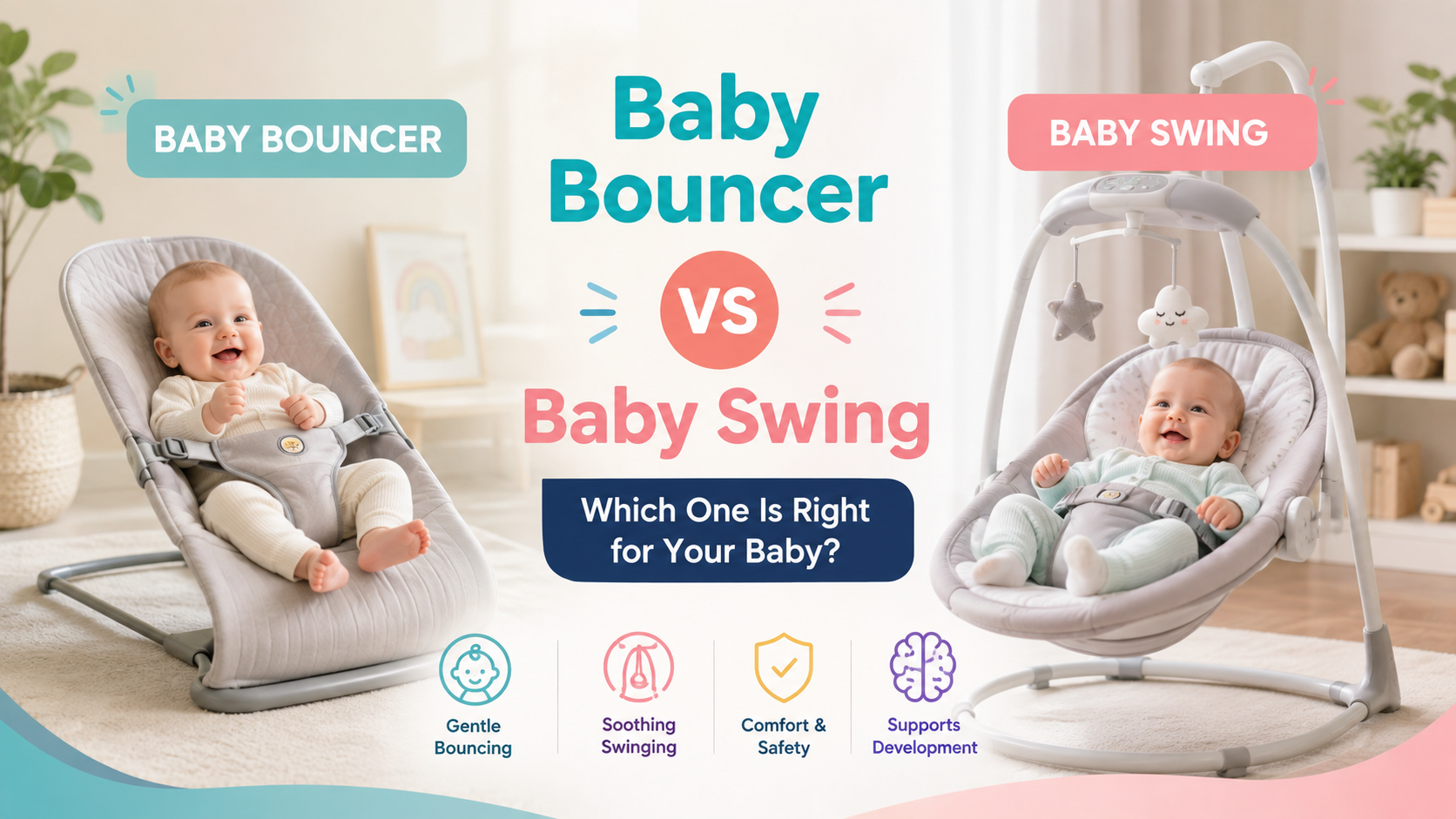
Baby Bouncer vs Baby Swing: Which One Is Right for Your Baby?
Choosing the right baby gear can make everyday parenting simpler, but with so many options available, knowing what your baby actually needs can be challenging. One common question Australian parents ask is whether they should choose a baby bouncer swing, a traditional baby swing, or a combination baby swing and bouncer.
Both products are designed to provide a safe, comfortable place for babies to relax while supervised. However, they work differently and offer unique advantages depending on your family’s lifestyle.
A baby bouncer is often praised for its simplicity, portability and ability to move naturally with your baby, while a baby swing provides powered movement and additional soothing features.
This guide compares baby swing bouncer options, explaining their differences, benefits, limitations, safety considerations and which choice may be best for your baby.
What Is a Baby Bouncer?
A baby bouncer is a lightweight baby seat designed to gently move when your baby kicks, shifts or when a parent provides gentle motion.
Many modern bouncers include:
- Soft padded seating
- Safety harnesses
- Adjustable recline positions
- Toy bars
- Washable covers
- Lightweight frames
Baby bouncers are popular because they are simple, practical and easy to move around the home.
Benefits of a Baby Bouncer
Lightweight and Portable
One of the biggest advantages of a baby bouncer is portability. Parents can easily move it between rooms, making it convenient for daily activities.
A bouncer can be useful when:
- Preparing meals
- Working from home
- Relaxing in the living room
- Visiting family
Encourages Natural Movement
Unlike motorised products, many bouncers respond to your baby’s own movements. This allows babies to learn cause and effect as their kicks create gentle bouncing.
Takes Up Less Space
For Australian families living in apartments or smaller homes, a compact baby bouncer can be a practical choice.
What Is a Baby Swing?
A baby swing is a seat that provides automatic swinging motion using batteries or electricity.
Unlike a bouncer, the movement does not usually depend on your baby’s actions.
Common baby swing features include:
- Multiple swing speeds
- Music and sounds
- Vibration settings
- Timers
- Toy bars
- Different movement patterns
Benefits of a Baby Swing
Provides Consistent Movement
Some babies respond well to repetitive, gentle movement. A baby swing can provide a consistent rhythm without parents needing to manually move the seat.
Helpful During Soothing Routines
A baby swing may be useful during supervised calming periods, especially when babies enjoy steady motion.
Additional Entertainment Features
Many swings include sensory features designed to encourage engagement.
Baby Bouncer vs Baby Swing: Key Differences
Understanding the differences between a baby swing and bouncer can help you choose the right product.
| Feature | Baby Bouncer | Baby Swing |
| Movement | Baby’s movement or manual bounce | Automatic swinging |
| Portability | Usually lightweight | Often heavier |
| Space required | Compact | Larger footprint |
| Power source | Usually no power required | Batteries or electricity |
| Storage | Easy to store | Requires more space |
| Best for | Everyday flexibility | Soothing routines |
| Price range | Often more affordable | Can be higher due to features |
Baby Swing and Bouncer: Which One Is Better?
There is no single answer because the right choice depends on your baby and your lifestyle.
Choose a Baby Bouncer If You Want:
A baby bouncer may be ideal if you need:
- A lightweight option
- Easy room-to-room movement
- A compact design
- Simple operation
- A product that encourages natural movement
Baby bouncers are particularly useful for parents who want flexibility without a large piece of equipment.
Choose a Baby Swing If You Want:
A baby swing may suit families looking for:
- Automatic movement
- Additional soothing settings
- Music and entertainment options
- Longer hands-free moments while supervising
However, swings are usually larger and less portable than traditional bouncers.
Baby Bouncer Swing Combination Options
Some products combine features from both categories, creating a baby swing bouncer design.
These hybrid models may include:
- Manual bouncing
- Automatic swinging
- Adjustable seating positions
- Entertainment features
- Multiple movement settings
Advantages of Combination Models
A combination baby swing and bouncer can offer:
More Flexibility
Parents can choose between powered movement and natural bouncing.
Longer Use Potential
Different settings may suit changing preferences as babies grow.
Space Efficiency
Instead of purchasing two separate products, some families prefer one multi-function option.
Things to Consider
Combination models may:
- Cost more
- Be heavier
- Require more storage space
- Include features you may not use
Always consider whether the additional functions suit your daily routine.
Which Option Is Best for Different Baby Stages?
Newborn Stage (0–3 Months)
Newborn babies usually need:
- Strong head and body support
- Comfortable reclining positions
- Gentle movement
- Secure harness systems
A supportive baby bouncer or gentle swing may both be suitable when used correctly.
Early Infant Stage (3–6 Months)
As babies become more alert, they may enjoy:
- Toy bars
- Interactive features
- More upright seating positions
- Sensory activities
Both options can provide entertainment during supervised awake time.
Older Infant Stage (6+ Months)
Older babies often become more active and curious.
Consider:
- Weight limits
- Seat size
- Stability
- Transition to floor play
Always follow manufacturer recommendations.
Safety Comparison: Baby Bouncer vs Baby Swing
Regardless of which product you choose, safety should always come first.
Baby Bouncer Safety Tips
- Place the bouncer on the floor.
- Always use the harness.
- Never leave your baby unattended.
- Avoid placing it on beds, tables or sofas.
- Check weight and age limits.
Baby Swing Safety Tips
- Use only on stable surfaces.
- Ensure straps are secured.
- Keep cords away from children.
- Follow manufacturer instructions.
- Monitor your baby during use.
Neither a baby bouncer nor baby swing should replace safe sleeping arrangements.
Factors to Consider Before Buying
Before choosing between a baby bouncer swing or baby swing, consider these factors.
1. Your Available Space
Ask yourself:
- Do I have room for a larger swing?
- Will I need to move it frequently?
- How easy is storage?
2. Your Daily Routine
A portable bouncer may suit parents who move around the home often.
A swing may be more suitable for families wanting additional soothing features.
3. Your Baby’s Preferences
Every baby is different. Some enjoy bouncing, while others prefer steady swinging motion.
4. Cleaning and Maintenance
Look for:
- Removable covers
- Washable fabrics
- Durable materials
- Easy-to-clean designs
Baby Bouncer vs Baby Swing: Quick Decision Guide
| Your Priority | Recommended Choice |
| Small home | Baby bouncer |
| Easy transport | Baby bouncer |
| Automatic movement | Baby swing |
| Extra soothing features | Baby swing |
| Multiple functions | Baby swing bouncer |
| Simple everyday use | Baby bouncer |
| Entertainment features | Baby swing |
Conclusion: Find the Right Baby Seat for Your Lifestyle
Choosing between a baby bouncer vs baby swing depends on what works best for your baby and your everyday routine.
A baby bouncer offers simplicity, portability and natural movement, while a baby swing provides automatic motion and extra soothing features. For parents wanting the best of both worlds, a baby swing and bouncer combination may provide added flexibility.
At Baby Bouncer Australia, we help Australian families choose practical, comfortable and reliable baby products designed for modern parenting needs. Explore our range today and find the perfect baby seat solution for your little one.