

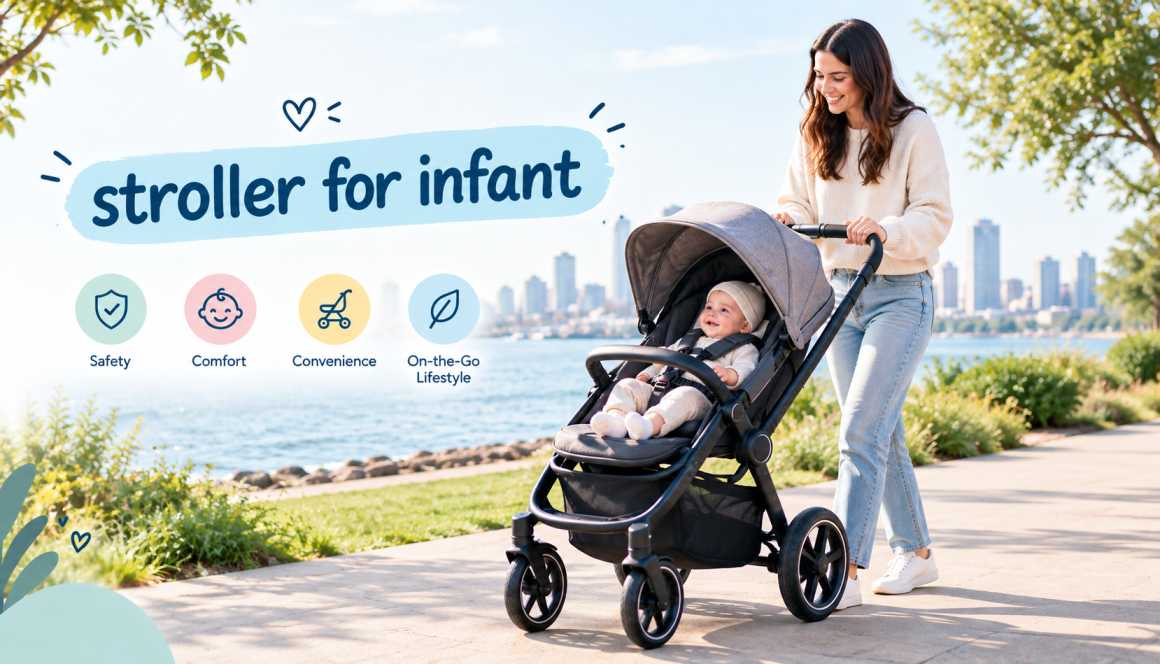
How to Choose the Best Stroller for Infant in Australia: A Parent’s Guide
Choosing the right stroller is an important decision for new parents. From your baby’s first outdoor walk to everyday shopping trips and family outings, a suitable stroller can make travelling with your little one more comfortable and convenient. However, with so many designs, sizes and features available, finding the right option can feel overwhelming.
If you’re searching for a stroller for infants, it’s important to look beyond appearance and price. You need to consider your baby’s age, head and neck support, reclining position, safety features, manoeuvrability and your family’s daily routine.
Australian parents also need to understand which strollers are appropriate for newborns and what safety requirements to check before purchasing.
This guide explains how to choose a suitable stroller for your infant, which features matter most and how to make a confident buying decision.
What Is a Stroller for an Infant?
A stroller for an infant is a wheeled baby transport system designed to carry a young baby during walks, shopping trips and other everyday activities. Depending on the model, it may feature a bassinet, a newborn-compatible reclining seat or a travel-system configuration.
Not every stroller is suitable from birth. Some models are designed for older babies who can sit upright, while others provide configurations intended for newborns.
Before purchasing, check the manufacturer’s recommended starting age, weight limits and instructions for newborn use. A stroller should provide the appropriate positioning and support for your baby’s developmental stage.
Parents commonly compare three types of baby transport systems:
1. Prams with a Bassinet
A pram with a bassinet provides a dedicated, flat lying space for a newborn. This configuration can be useful during the early months when babies cannot support their heads or sit independently.
Check that the bassinet is approved for the intended use and that it meets the manufacturer’s requirements for age, weight and positioning.
2. Newborn-Compatible Strollers
Some strollers have seats that recline sufficiently for newborn use, provided the manufacturer specifically approves that configuration for babies from birth.
These models can be practical for parents who want a transport option that adapts as their baby grows. However, an ordinary reclining seat should not automatically be assumed to be suitable for a newborn.
3. Convertible Pram-Stroller Systems
Convertible systems may allow parents to switch between a bassinet and a seated stroller configuration. This can offer flexibility as a baby develops, although the suitability of each configuration must be checked separately.
If you’re comparing different designs, read our guide to buying a pram in Australia for more information about choosing a baby transport system that fits your needs.
8 Important Factors to Consider When Choosing a Stroller for Infant
Finding the right stroller becomes easier when you know which features deserve your attention. Use the following checklist to compare options before making a purchase.
1. Prioritise Newborn Suitability and Support
Your baby’s age and development should be the starting point when choosing a stroller.
Newborns have limited head and neck control, so they need a suitable lying position and adequate support. A stroller designed for older babies may place a newborn in an inappropriate seated position.
Look for a model that:
- Is explicitly approved for use from birth, if you intend to use it for a newborn.
- Provides a manufacturer-approved bassinet or newborn-compatible seat.
- Supports your baby’s head and body appropriately.
- Meets the manufacturer’s age and weight recommendations.
- Includes clear instructions for each seating configuration.
Avoid choosing a stroller based solely on the claim that its seat reclines. Confirm that the specific model and position are approved for your baby’s age.
2. Check Essential Safety Features
Safety should be a priority when comparing any stroller for infant use. A well-designed stroller should help keep your baby securely positioned while allowing you to control and manoeuvre the frame.
Important features to examine include:
Five-point harness: A suitable harness helps secure your baby at the shoulders, waist and between the legs. Check that it adjusts correctly and fastens securely.
Reliable brakes: The parking brakes should engage properly and prevent the stroller from rolling when stationary. Test them before buying, if possible.
Stable frame: Look for a sturdy frame that locks securely into position. The stroller should not feel unstable during normal handling.
Secure wheels: Check that the wheels are properly attached and that the stroller steers without unexpected movement.
Wrist tether strap: Use the supplied tether strap as instructed to help prevent the stroller from rolling away, particularly on slopes.
Safe folding mechanism: The frame should lock securely when open, and the folding mechanism should operate as described in the manufacturer’s instructions.
In Australia, check that the stroller complies with the applicable mandatory product safety requirements. The Australian product safety guidance also recommends checking for hazards such as trapping gaps, unstable frames and unsecured harnesses.
Never hang heavy bags from the handles, as additional weight can increase the risk of the stroller tipping over.
3. Choose a Comfortable and Appropriate Seat
Your baby’s comfort depends on more than soft padding. The seat or bassinet must be appropriate for their age, size and developmental needs.
For a newborn, focus on the approved lying position, body support and space available within the bassinet or seat. For an older infant, consider adjustable seating positions and whether the harness can be adjusted as your baby grows.
Other features worth checking include:
- Breathable, comfortable fabrics.
- Adequate head support where specified by the manufacturer.
- A canopy that provides shade.
- A footrest appropriate for the child’s stage.
- Removable fabrics or covers that can be cleaned according to the care instructions.
A padded seat does not compensate for an unsuitable position or poor support. Always follow the manufacturer’s guidance for the intended age group.
Also remember that a stroller is not automatically a safe sleep space. If your baby falls asleep in an inclined stroller seat, move them to a suitable, firm and flat sleep surface as soon as practical and follow Australian safe-sleep guidance.
4. Consider Weight, Size and Folding Convenience
A stroller may look perfect in a product photograph but feel difficult to manage in everyday life. Before choosing one, consider where you will store it and how often you will need to lift or fold it.
If you drive regularly, measure your car boot and compare it with the stroller’s folded dimensions. Check whether the frame fits without removing wheels or other components.
For families who frequently use public transport, a lightweight and compact design may be easier to handle. Parents living in apartments may also prefer a stroller that folds neatly and fits into a limited storage area.
When comparing models, check:
- Overall weight and folded dimensions.
- Whether one person can fold and unfold it comfortably.
- Whether the folded frame locks securely.
- Whether it fits in your car boot or storage space.
- Whether it can be carried safely when folded.
A compact stroller can be convenient, but portability should never take priority over newborn suitability or essential safety features.
5. Check Wheel Quality and Manoeuvrability
The stroller’s wheels affect how easily you can navigate footpaths, shopping centres and park paths.
Swivelling front wheels can make tight turns easier, particularly in busy shopping areas. Some models allow the front wheels to lock for improved control on certain surfaces.
Larger wheels may handle uneven paths and kerbs more comfortably, while smaller wheels are often found on compact models designed for smoother surfaces.
Consider where you expect to use your stroller most frequently.
For everyday city use, you might prioritise easy steering and a narrow frame. For regular walks through parks, you may prefer a model designed to handle uneven surfaces.
If you’re considering a three-wheel stroller, assess its stability and handling carefully. Three-wheel designs can be manoeuvrable, but no wheel configuration automatically guarantees greater safety. Always use the brakes and tether strap as directed, and never leave a stroller unattended on a slope.
6. Look for Weather Protection and Useful Storage
Australian weather can vary considerably, so a stroller’s canopy and weather accessories may be useful for everyday outings.
A canopy can provide shade, while compatible rain protection can help during wet weather. Check that accessories fit the particular stroller and can be used according to the manufacturer’s instructions.
For sunny days, do not rely on the canopy alone. Follow Australian sun-safety recommendations, including appropriate clothing and shade.
Storage is another practical consideration. A basket beneath the seat can provide room for nappies, wipes, spare clothing and other essentials.
Before buying, check the basket’s weight limit and make sure items can be accessed without compromising stability. Avoid overloading the stroller or placing heavy bags on the handle.
Useful extras should improve convenience without introducing additional safety risks.
7. Decide Whether You Need a Travel System
A travel system combines a stroller frame with compatible baby transport components, such as a bassinet or approved infant car seat.
For parents who frequently travel by car, a compatible system may make transitions between the car and stroller more convenient. However, compatibility must be confirmed for the exact components and adaptors being used.
Before choosing a travel system, check:
- Whether the car seat is approved for the intended use.
- Whether the stroller frame accepts that exact model.
- Whether the correct adaptors are included.
- Whether the bassinet or seat is suitable for your baby’s age.
- Whether the combined system is manageable for your family.
A car seat is designed primarily for travel in a vehicle, not as a regular sleeping space outside it. If your baby falls asleep in a car seat after a journey, follow safe-sleep guidance and move them to an appropriate flat sleep surface when practical.
If you do not regularly travel by car, a simpler stroller or pram may meet your needs without the additional components.
8. Compare Price, Quality and Long-Term Value
Strollers are available at different price points, but a higher price does not automatically mean a safer or more suitable product.
Instead of comparing prices alone, consider the features you genuinely need and how often you expect to use the stroller.
Check the product warranty, availability of replacement parts, cleaning instructions and customer support. If you are considering a convertible model, confirm that its different configurations are suitable for your baby’s age and weight.
It can also help to compare the cost of accessories separately. A stroller that appears affordable initially may require additional purchases, while another model may include the components you need.
Set a realistic budget, then compare suitable models against the same checklist. This approach can help you find a practical balance between safety, convenience and value.
How to Choose a Stroller for Your Australian Lifestyle
The best stroller for your family depends on how and where you plan to use it.
For Shopping and Everyday Errands
A stroller with responsive steering, a manageable width and accessible storage can be helpful when navigating shopping centres and narrow aisles.
Check that the frame is easy to control and that the basket can carry your usual essentials without exceeding its weight limit.
For Walks in Parks
If you regularly visit parks or use uneven footpaths, look for wheels and suspension designed for the surfaces you encounter.
Test the handling and check the manufacturer’s recommendations for the terrain where the stroller can safely be used.
For Public Transport and Travel
A compact, lightweight model may be easier to fold, lift and store when using buses, trains or travelling by car.
Consider the folded size, folding mechanism and whether you can manage the stroller independently while carrying other essentials.
For Growing Families
A convertible system may be useful if you want to move from a bassinet to a seated configuration as your baby develops.
However, check each configuration’s suitability and limits. A product advertised as suitable for multiple stages should still be used according to its specific instructions.
For more help comparing baby transport options, read our guide to choosing a pram or pushchair in Australia.
Common Mistakes to Avoid When Buying a Stroller for Infant
Even careful shoppers can overlook important details when comparing baby products. Avoid these common mistakes before making your decision.
Choosing based on appearance alone: A stylish design is appealing, but suitability, stability, brakes and harness quality matter more.
Assuming every stroller suits newborns: Always confirm the approved age range and seating configuration. Not every stroller provides the positioning required for a newborn.
Ignoring folded dimensions: A bulky stroller may be difficult to store or transport if it does not fit your car or home.
Overlooking safety instructions: Read the manufacturer’s manual and check the applicable Australian product safety requirements before use.
Overloading the handles: Heavy bags can affect stability and increase the risk of tipping.
Using accessories that are not compatible: Unapproved accessories or incorrect adaptors may introduce safety risks. Use only compatible components as instructed.
Treating a stroller as a sleeping bed: Strollers are not automatically safe sleep spaces. Follow safe-sleep recommendations and move your baby to a suitable flat sleep surface when practical.
Taking time to check these details can help you avoid an unsuitable purchase and make everyday outings more manageable.
Stroller Safety Tips Every Parent Should Follow
Once you have selected a suitable stroller, safe use is just as important as the buying decision.
Before every outing, check that the frame is locked open, the wheels are secure and the brakes work correctly. Place your baby in the approved position and fasten the harness according to the instructions.
Keep your hands on the handle while moving, use the tether strap where provided and engage the brakes whenever you stop. Never leave your baby unattended in the stroller.
Keep fingers away from folding joints and make sure your baby is clear of the frame before folding or unfolding it. Avoid placing extra mattresses, pillows or bulky padding in the stroller, as these may create hazards.
Check the stroller periodically for loose parts, damaged straps, worn wheels or malfunctioning brakes. If any component appears damaged, stop using the stroller until the issue has been addressed.
For further guidance, consult the Australian Competition and Consumer Commission’s prams and strollers safety guide.
Final Thoughts: Find the Right Stroller for Your Infant
Choosing the right stroller does not have to be complicated. Start with your baby’s age and developmental needs, then compare essential safety features, comfort, manoeuvrability, storage and price.
The best stroller for infant use is one that is approved for your baby’s stage, easy for you to manage and appropriate for the places you visit most often. Take time to check the specifications, read the instructions and assess how the stroller will fit into your daily routine.
By making an informed decision, you can choose a practical baby transport option that supports comfortable outings and gives you greater confidence as you explore the world with your little one.
Explore the Baby Bouncers Australia shop to discover baby essentials for your family’s needs, and compare suitable pram and stroller options before making your final choice.
Frequently Asked Questions
1. What should I look for in a stroller for infant use?
Prioritise newborn suitability, appropriate head and body support, secure harnesses, reliable brakes, frame stability and ease of handling. Check the manufacturer’s age and weight recommendations before buying.
2. Can a newborn use a regular stroller?
Not every stroller is suitable from birth. A newborn should only use a model and configuration specifically approved for that stage, such as a suitable bassinet or approved newborn-compatible seat. Always follow the manufacturer’s instructions.
3. Is a pram or stroller better for an infant?
Both may be suitable, depending on the design. A bassinet-style pram can provide a flat lying position for a newborn, while some strollers have approved newborn configurations. Choose according to your baby’s age, the product specifications and your daily needs.
4. Is a lightweight stroller a good choice for new parents?
A lightweight stroller can be convenient for shopping, travel and storage. However, it is suitable for a newborn only if the manufacturer approves it for newborn use and it provides the required positioning and support.
5. How can I check whether a stroller meets Australian safety requirements?
Review the product’s safety labels, instructions and manufacturer information. Check compliance with the applicable mandatory Australian product safety standard, and consult official product safety guidance if you are unsure.


