

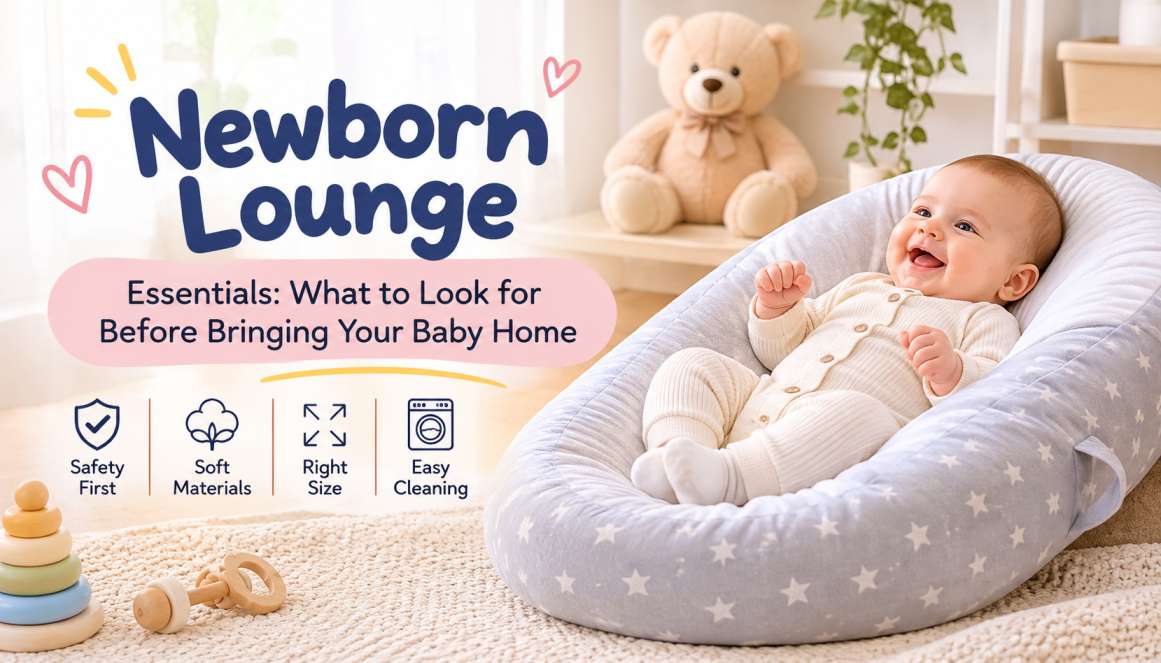
Newborn Lounge Essentials: What to Look for Before Bringing Your Baby Home
Bringing a newborn home is one of the most exciting milestones for any parent. From preparing the nursery and choosing the right baby clothes to arranging feeding essentials and planning comfortable spaces, every little detail matters. As you prepare for your baby’s arrival, you may come across several products designed to make everyday parenting more convenient. One product that often attracts attention is a newborn lounge.
A newborn lounge is commonly marketed as a soft, cosy space where parents can position their baby during supervised awake time. Available in different shapes, materials, designs and styles, these products may look like a useful addition to a baby’s collection of essentials. However, with so many options available, choosing the right one requires more than simply selecting an attractive design.
Parents should understand what a newborn lounge is designed for, which features matter, how to assess its construction and, most importantly, how to use it safely. Not every baby product is suitable for every activity, and understanding the difference between a supervised play product and a safe sleeping space is particularly important during the newborn stage.
Whether you are a first-time parent preparing your nursery or an experienced parent updating your baby’s essentials, this guide will help you understand the important considerations before purchasing a newborn lounge.
1. What Is a Newborn Lounge?
A newborn lounge is generally a small baby product designed to provide a designated space for a baby during supervised awake time. It may feature a padded base, soft fabric covering and raised sides, depending on its design.
These products are often promoted for activities such as spending a short period near a parent, enjoying supervised interaction or being positioned comfortably while awake. Some designs also include removable covers, portable construction or additional accessories.
However, it is important to understand that the term newborn lounge is not a guarantee of a particular safety standard or intended use. Products sold under similar names can have very different constructions and purposes.
Before purchasing one, check the manufacturer’s description, age and weight recommendations, instructions and safety warnings.
An important safety distinction: A padded newborn lounge, baby nest or baby lounger is not a safe sleeping surface. It should never replace a properly designed cot, bassinet or cradle. If your baby becomes sleepy or falls asleep while using a lounge, move them to a suitable safe sleeping environment.
For everyday baby care, parents should choose products according to their intended purpose rather than assuming that one product can safely perform multiple functions.
2. Why Do Parents Consider Buying a Newborn Lounge?
Preparing for a newborn involves organising several areas of the home. Parents often look for practical products that fit naturally into their everyday routine.
A newborn lounge may attract attention because of its compact appearance, soft materials and dedicated design. However, its usefulness depends on the product’s intended function and whether it meets your family’s practical requirements.
Here are some reasons parents may consider this type of product.
A Dedicated Space for Supervised Awake Time
New parents often spend much of their day moving between feeding, changing nappies, preparing clothes and completing other household activities.
A suitable baby product can help organise a designated area for supervised awake-time interaction. However, babies should always remain within an adult’s direct supervision, and a lounge should never be treated as a place to leave a baby unattended.
Convenient Nursery Organisation
Some newborn lounges are designed with compact dimensions that can fit into a nursery or designated baby-care area.
Before choosing one, measure the available space and check the manufacturer’s requirements for placement. A product should sit securely on an appropriate, stable surface and should never be placed on a bed, sofa, table or raised platform.
Different Designs for Different Preferences
Newborn lounges are available in a variety of colours, fabrics and styles. Some parents prefer neutral shades that complement their nursery, while others choose brighter patterns and playful designs.
Although appearance can influence your decision, safety, construction and suitability should always come first.
An Addition to Your Baby-Care Setup
A newborn lounge may be considered alongside other baby-care products, such as changing mats, feeding accessories, prams and supervised play equipment.
Rather than buying every product immediately, consider your baby’s actual needs and how each item will fit into your daily routine.
3. What to Look for When Buying a Newborn Lounge
Choosing a newborn lounge requires careful consideration. A product may look comfortable in photographs, but its construction, materials and safety information are much more important.
Here are some important factors to examine before making a purchase.
1. Check the Intended Purpose
The first thing to understand is what the product is actually designed to do.
Some products marketed as newborn lounges are baby nests or padded loungers. Others may be inclined baby seats or supervised play products.
These categories should not be treated as interchangeable.
Read the product description carefully and look for information about:
- The manufacturer’s intended use.
- The recommended age and weight range.
- Whether the product is designed for supervised awake time.
- Whether it has an inclined or curved surface.
- Specific safety warnings.
- Activities for which the product should not be used.
Avoid products that make unclear or misleading claims about being suitable for sleeping without meeting the relevant Australian safety requirements.
2. Examine the Base and Overall Construction
The base is an important feature to inspect when evaluating any baby product.
Look at how the product is constructed, whether its materials are securely attached and whether it has any uneven or unstable areas.
Check for:
- Loose stitching.
- Exposed filling.
- Damaged seams.
- Unsecured decorative components.
- Small detachable parts.
- Poorly finished edges.
- Signs of weak or uneven construction.
A product should be free from defects and supplied with clear instructions.
Remember that a soft, padded base does not automatically make a newborn lounge suitable for sleeping. For infant sleep, Australian guidance recommends a firm, flat and level surface in an appropriate cot, bassinet or cradle.
3. Choose Appropriate Fabric Materials
Newborn skin is delicate, so parents naturally pay attention to the fabrics used in baby products.
When comparing newborn lounge options, examine the fabric composition and care instructions.
Some useful considerations include:
- Soft fabric that is comfortable to touch.
- Materials suitable for regular cleaning.
- Durable stitching.
- Fabric that does not easily shed fibres.
- No exposed filling or damaged surfaces.
- Clear information about material composition.
If your baby has particularly sensitive skin, discuss suitable fabric choices with your healthcare professional.
Do not assume that a fabric is hypoallergenic, antibacterial or medically beneficial simply because the product description uses these terms. Look for reliable product information and supporting evidence.
4. Look for Removable and Washable Covers
Babies can create unexpected messes throughout the day. Milk spills, drooling, nappy leaks and small accidents are all part of early parenthood.
This makes cleaning an important consideration.
A removable cover may make regular maintenance easier, but parents should check whether the cover is designed to be removed and reattached safely.
Before purchasing, find out:
- Whether the cover is machine washable.
- Which washing temperature is recommended?
- Whether the filling can be cleaned.
- How quickly the material dries.
- Whether the cover can be replaced.
- Whether cleaning products could damage the fabric.
Always follow the manufacturer’s cleaning instructions. Never use a product if cleaning has damaged its seams, structure or components.
5. Check the Product Dimensions
Not every newborn lounge will suit every home.
Some families have a dedicated nursery, while others organise a smaller baby-care space within their bedroom or living area.
Check the product’s exact measurements before ordering.
Consider:
- Overall length and width.
- Height of the product.
- Space required around it.
- Storage requirements.
- Whether it fits the intended location.
- Whether it can be moved without compromising safety.
Avoid placing a newborn lounge in a cramped area where it could come into contact with heaters, electrical appliances, loose cords or other household hazards.
6. Review the Manufacturer’s Age and Weight Recommendations
Newborns develop rapidly during their first few months. Their movements and physical abilities change as they grow.
A product that may be suitable for a younger baby may become inappropriate once the baby starts rolling, pushing up or moving more actively.
Always check the manufacturer’s age and weight restrictions.
Also look for instructions explaining when use should stop. Do not continue using a product simply because your baby has not reached its maximum recommended weight.
Developmental changes can be just as important as age and weight.
7. Inspect the Edges, Seams and Openings
Small construction problems can create unnecessary risks.
Carefully examine the edges and seams to make sure there are no loose threads, gaps, exposed zips or small components that could become detached.
If the product contains decorative attachments, check whether they are firmly secured and whether the manufacturer provides specific warnings.
Never add extra cushions, pillows, blankets, toys or padding to change the shape of a newborn lounge.
Additional accessories can introduce hazards that were not considered in the original product design.
8. Read the Safety Warnings
Safety information should be one of the deciding factors when comparing products.
In Australia, the ACCC has introduced mandatory standards covering infant sleep products and information requirements for certain inclined non-sleep products.
The relevant requirements became fully mandatory for suppliers on 19 January 2026.
When purchasing a newborn lounge, check the product’s warnings and determine which standards apply to its category.
Look for clear information about:
- Intended use.
- Supervision requirements.
- Sleep restrictions.
- Age and weight limits.
- Assembly instructions.
- Cleaning and maintenance.
- Manufacturer or supplier details.
A responsible retailer should provide sufficient product information to help parents make an informed purchasing decision.
4. Newborn Lounge Safety: What Every Parent Should Understand
Safety deserves more attention than appearance when selecting any product for a newborn.
One of the most common misunderstandings among new parents is that a soft and padded baby product must automatically be safe for resting or sleeping.
This is not correct.
Baby loungers, nests and similar padded products are not recommended for infant sleep. Their soft surfaces, raised sides or curved designs can create risks if a baby’s face becomes pressed against the material or their head moves into a position that restricts breathing.
The Australian Competition and Consumer Commission (ACCC) provides specific guidance on products that are and are not suitable for infant sleep.
Never Use a Newborn Lounge as a Sleeping Space
A newborn lounge should not replace a cot, bassinet or cradle.
For every sleep, place your baby:
- On their back.
- On a firm and flat mattress.
- On a level sleeping surface.
- With their head and face uncovered.
- In a clear sleep space without pillows, soft toys, loose blankets or other soft items.
Choose a cot, bassinet or cradle that meets the applicable Australian mandatory safety requirements.
You can also refer to the ACCC’s official guide to products that are safe for baby to sleep in before making decisions about your baby’s sleep environment.
Always Supervise Your Baby
Newborns require continuous attention, even when they are not actively feeding or crying.
Never leave your baby unattended in a newborn lounge or other non-sleep baby product.
Keep your baby within direct adult supervision and follow the manufacturer’s instructions throughout use.
A lounge is not a substitute for holding your baby, responding to their needs or providing appropriate care.
Avoid Elevated Surfaces
Never place a newborn lounge on a sofa, bed, dining table, kitchen counter or other raised surface.
Even if a product appears stable, a baby’s movements can change its position and create a risk of falling.
Use products only in accordance with their instructions and in an appropriate, stable location.
Keep Soft Accessories Away
Extra pillows, blankets, stuffed toys and decorative cushions may make a baby area look attractive, but they can create unnecessary risks.
Do not add accessories that could cover your baby’s nose or mouth or interfere with their movement.
Follow the product’s instructions and keep the baby’s surroundings clear.
Stop Using the Product When Your Baby Outgrows It
As babies develop, they begin to move more actively.
Rolling, pushing up and increased movement can make certain products unsuitable.
Follow the manufacturer’s instructions about when to discontinue use. Never wait for an accident or an obvious sign of instability before stopping.
5. Newborn Lounge vs Baby Bouncer: Understanding the Difference
Parents often compare a newborn lounge with a baby bouncer because both products may be marketed for babies during their early months.
However, they have different designs and intended functions.
A newborn lounge generally refers to a padded baby nest or lounger-style product, while a baby bouncer is usually designed with a supportive frame or base that allows gentle movement.
Here is a general comparison.
| Feature | Newborn Lounge | Baby Bouncer |
| Typical design | Padded, nest-style structure | Framed seat with a bouncing mechanism |
| Main purpose | Varies by product; often marketed for supervised awake time | Supervised play and soothing |
| Movement | Usually stationary | May move gently |
| Portability | Depends on design | Depends on design |
| Cleaning | Depends on fabric and construction | Depends on removable covers |
| Sleep suitability | Not safe for infant sleep | Not safe for infant sleep |
Neither product should be used as a sleeping space.
If you are considering a bouncer, check its stability, safety harness, age restrictions and instructions.
You can also read our detailed guide on swing for newborns to understand the important considerations when comparing different baby soothing and play products.
The best choice depends on the intended purpose, your baby’s developmental stage and the manufacturer’s safety instructions.
6. How to Prepare Your Home Before Bringing Your Baby Home
Choosing the right newborn lounge is only one part of preparing your home for a new arrival.
Parents should also organise a comfortable, practical and safe environment where everyday baby-care activities can take place.
Here are some helpful steps to consider.
Organise a Dedicated Baby-Care Area
Start by identifying an appropriate space for everyday baby-care activities.
Keep frequently used essentials nearby, including nappies, clean clothes, wipes and feeding supplies.
Make sure the area is well organised and free from loose cords, electrical appliances, heaters and other hazards.
If you use a newborn lounge, follow its specific placement and supervision instructions.
Prepare a Separate Safe Sleeping Area
Your baby should have a dedicated sleeping space before arriving home.
A suitable cot, bassinet or cradle should have a firm, flat and level mattress that fits properly.
Keep the sleeping area clear of soft toys, pillows, cot bumpers, loose blankets and unnecessary accessories.
It is helpful to prepare this space in advance rather than waiting until after your baby arrives.
Keep Everyday Essentials Accessible
New parents often underestimate how frequently they will need basic baby-care products.
Organising essential items in advance can make everyday routines easier.
Consider keeping the following items accessible:
- Nappies and wipes.
- Baby clothing.
- Clean towels.
- Feeding supplies.
- Muslin cloths.
- Appropriate baby skincare products.
- A thermometer.
- Clean bedding for the baby’s approved sleeping space.
Choose products according to your baby’s age and needs rather than purchasing everything available in the market.
Make Room for Feeding and Changing
Feeding and nappy-changing routines can take up a significant part of your day.
Prepare a comfortable feeding area with easy access to the items you regularly use.
For nappy changes, choose a stable and appropriate changing surface. Never leave your baby unattended on a change table, even for a moment.
A little organisation before your baby’s arrival can make these everyday tasks easier to manage.
7. Other Baby Essentials to Consider Alongside a Newborn Lounge
A newborn needs several products during the first few months. However, it is important to choose items based on their practical purpose rather than following every parenting trend.
Here are some other baby essentials worth considering.
Baby Pram
A baby pram is one of the most useful purchases for families who plan to take their newborn outdoors.
When choosing a pram, consider its suitability from birth, the manufacturer’s age and weight recommendations, folding mechanism, wheel design, braking system and storage capacity.
A newborn requires an appropriate reclined or flat position according to the pram manufacturer’s instructions.
Also check whether the pram offers a suitable restraint system and whether it can be folded and stored conveniently.
Explore the Cuteably collection of baby pram options to compare styles and features when planning your baby’s travel essentials.
Baby Bouncer
A baby bouncer can be useful for short periods of supervised awake-time play or soothing, depending on its design.
Before purchasing one, check the stability of the frame, safety harness, base construction and manufacturer’s age restrictions.
Always place the bouncer on the floor and use its harness as instructed.
Never place it on an elevated surface or allow your baby to sleep in it.
Baby Swing
Some parents consider baby swings as an additional soothing product.
These products may feature different movement settings, seat designs and entertainment options.
However, a baby swing should only be used for its intended purpose and under continuous supervision.
Compare the manufacturer’s instructions, safety warnings, stability and suitability for your baby’s age.
Baby Bathing Essentials
Bathing a newborn requires preparation and close attention.
Choose a suitable baby bath that offers appropriate support according to its design and instructions.
Keep towels, clean clothes and bathing essentials within reach before beginning.
Never leave a baby unattended in or near water, even for a short moment.
Baby Clothing and Bedding
Newborn clothing should be comfortable, suitable for the weather and easy to change.
Choose breathable fabrics and appropriate sizes.
For sleep, use safe bedding practices and avoid loose bedding, pillows and soft accessories around your baby’s face.
Baby Feeding Accessories
Depending on your feeding routine, you may need bottles, sterilising equipment, breast pumps, burp cloths or other feeding accessories.
Choose products that suit your requirements and follow the manufacturer’s cleaning and sterilising instructions.
8. Common Mistakes to Avoid When Buying a Newborn Lounge
Even parents who carefully research baby products can overlook important details.
Here are some common mistakes worth avoiding.
Choosing Appearance Over Safety
A beautifully designed newborn lounge may look perfect in your nursery, but appearance should never be the main purchasing consideration.
Always investigate its intended purpose, construction, warnings and safety information first.
Assuming All Baby Lounges Are the Same
Products sold under similar names can have different designs and intended uses.
Do not assume that the features or safety instructions of one model apply to another.
Read the product information for the exact model you intend to purchase.
Using the Lounge for Overnight Sleep
This is one of the most important mistakes to avoid.
Baby loungers and padded nests are not safe infant sleeping products. Never leave your baby sleeping in one.
Always use an appropriate cot, bassinet or cradle for naps and overnight sleep.
Ignoring Weight and Age Restrictions
Parents sometimes continue using baby products after their child has outgrown the recommended age or weight range.
Check these limits regularly and pay attention to developmental milestones.
Buying Without Checking Cleaning Instructions
Baby products need regular cleaning.
If a product has complicated cleaning requirements, consider whether it will be practical for your household.
Check whether its cover can be removed and whether the materials can be maintained according to the manufacturer’s instructions.
Overlooking Product Warnings
Do not skip the safety information just because a product appears simple.
Read the instructions before use and make sure every caregiver understands the correct way to use it.
Purchasing from Unclear Sellers
When shopping online, choose retailers that provide transparent product information, clear specifications and accessible customer support.
Avoid products with missing manufacturer details, unclear safety warnings or exaggerated claims.
9. How to Choose the Right Newborn Lounge Online
Shopping online makes it easier to compare different baby products without visiting several physical stores.
However, photographs alone cannot tell you everything about a product.
Before adding a newborn lounge to your cart, take time to evaluate the listing.
Read the complete product description: Check the intended purpose, dimensions, material information, age recommendations and warnings.
Examine product photographs: Look at the construction, seams, edges and included components. Do not rely only on lifestyle photographs.
Check the specifications: Confirm the exact measurements, weight restrictions and cleaning requirements.
Read customer reviews carefully: Reviews can provide useful information about product quality, packaging, cleaning and customer service. However, customer experiences are not a substitute for independent safety information.
Review the return policy: Understand the retailer’s return and exchange conditions before placing an order.
Check the seller’s credibility: Look for clear business details, customer support information and transparent product policies.
Avoid exaggerated marketing claims: Be cautious of statements suggesting that a product guarantees better sleep, prevents health conditions or supports development without reliable evidence.
A well-informed purchase is more valuable than a quick purchase based on attractive advertising.
10. When Should You Buy a Newborn Lounge?
Many parents begin researching baby essentials during pregnancy, especially when preparing their nursery during the second or third trimester.
Buying early can give you enough time to compare options, understand product instructions and organise your home.
However, there is no need to purchase every baby product immediately.
Consider the following approach:
During the second trimester: Begin researching major baby essentials, comparing product categories and planning your nursery layout.
During the third trimester: Review the products you genuinely need, check safety information and organise your baby’s sleeping and changing areas.
Before your due date: Make sure essential items are ready, instructions have been reviewed and the baby’s sleeping space is properly prepared.
If you are considering a newborn lounge, decide whether it serves a genuine supervised awake-time purpose in your routine.
Remember, it is an optional product rather than an essential requirement for every newborn.
11. Creating a Practical and Comfortable Nursery
A nursery does not need to be filled with expensive products to be functional.
The most important thing is to create an organised environment that supports your baby’s everyday needs.
Here are a few ideas for planning your nursery.
Keep the Layout Simple
Avoid overcrowding the room with furniture and accessories.
Make sure there is enough space to move comfortably between the cot, changing area and storage units.
Keep the baby’s sleeping area away from heaters, electrical appliances and loose cords.
Choose Practical Storage
Use baskets, drawers or shelves to organise clothes, nappies, towels and other essentials.
Store frequently used items within easy reach of adults while keeping potentially dangerous products, medications and small objects securely out of the baby’s reach.
Focus on Lighting and Temperature
A comfortable room environment can make everyday baby care more manageable.
Avoid placing the cot or bassinet near direct heat sources, and dress your baby appropriately for the room temperature.
Avoid Unnecessary Decorations Around the Cot
Nursery decorations can make a room look beautiful, but the baby’s sleep space should remain clear.
Keep pillows, soft toys, hanging decorations, loose cords and other hazards away from the sleeping area.
Choose Products That Serve a Clear Purpose
Before buying another baby accessory, ask yourself whether it genuinely supports your family’s routine.
Practicality, quality and correct use should matter more than the number of products in your nursery.
12. Building Your Baby Essentials Checklist
Preparing for a newborn can feel overwhelming, especially when you are shopping for the first time.
A checklist can help you prioritise the products that are genuinely useful.
Here is a simple list to help you organise your shopping.
| Category | Essential items |
| Sleeping | Compliant cot or bassinet, firm mattress and suitable sleepwear |
| Travel | Appropriate baby pram and car restraint |
| Clothing | Bodysuits, sleepsuits, socks and weather-appropriate clothing |
| Feeding | Bottles, feeding supplies and burp cloths as needed |
| Bathing | Baby bath, towels and suitable bathing products |
| Changing | Nappies, wipes, changing mat and spare clothing |
| Hygiene | Baby nail care and appropriate skincare essentials |
| Organisation | Storage baskets, drawers and laundry supplies |
| Supervised play | Age-appropriate play products used according to their instructions |
| Optional products | Newborn lounge or other accessories, where appropriate |
The newborn lounge falls under optional products because every family has different requirements.
You can gradually build your collection of baby products by comparing items that match your baby’s age, your home environment and your daily routine.
Final Thoughts
Preparing for your baby’s arrival involves making several important decisions, and choosing the right baby products is one of them. A newborn lounge may appear to be a convenient addition to your nursery, but it is important to understand its intended purpose and limitations before purchasing one.
Focus on product construction, fabric quality, dimensions, cleaning requirements, age recommendations and clear safety instructions. Most importantly, remember that a padded newborn lounge is not a substitute for a safe sleeping environment.
Rather than buying products simply because they are popular, choose items that genuinely support your family’s daily routine. Prioritise a suitable cot or bassinet, safe travel equipment, feeding supplies and other practical essentials.
Cuteably, exploring different baby-care categories can help parents compare available options and prepare for their little one’s arrival. Take your time, research carefully and make informed decisions that put your baby’s safety and everyday needs first.
Frequently Asked Questions About Newborn Lounges
What is a newborn lounge used for?
A newborn lounge is generally marketed as a padded baby product for supervised awake time. Its exact purpose depends on the design and manufacturer’s instructions. It should not be used as a substitute for a cot, bassinet or cradle.
Is a newborn lounge safe for sleeping?
No. Padded baby loungers, nests and similar products are not recommended for infant sleep. Their soft surfaces and raised or curved sides can create suffocation risks. Always place your baby on their back on a firm, flat and level surface in an appropriate sleeping product.
Can a newborn sleep in a baby lounge during the day?
No. Daytime naps require the same safe sleeping practices as overnight sleep. If your baby falls asleep in a lounge, move them to an appropriate cot, bassinet or cradle.
What should I check before buying a newborn lounge?
Check the product’s intended purpose, construction, fabric, dimensions, cleaning instructions, age and weight restrictions, manufacturer information and safety warnings.
Is a newborn lounge necessary for every baby?
No. A newborn lounge is an optional purchase. Parents can care for their newborn without one. Prioritise essential products such as an appropriate sleeping space, suitable clothing, feeding supplies and safe travel equipment.
What is the difference between a newborn lounge and a baby nest?
The terms are sometimes used interchangeably in product marketing. Both may describe padded products with raised sides. Their exact design and intended use can differ, so always read the manufacturer’s instructions and safety warnings.
Neither should be considered a safe sleeping space unless the specific product is designed and certified for infant sleep under the applicable requirements.
