
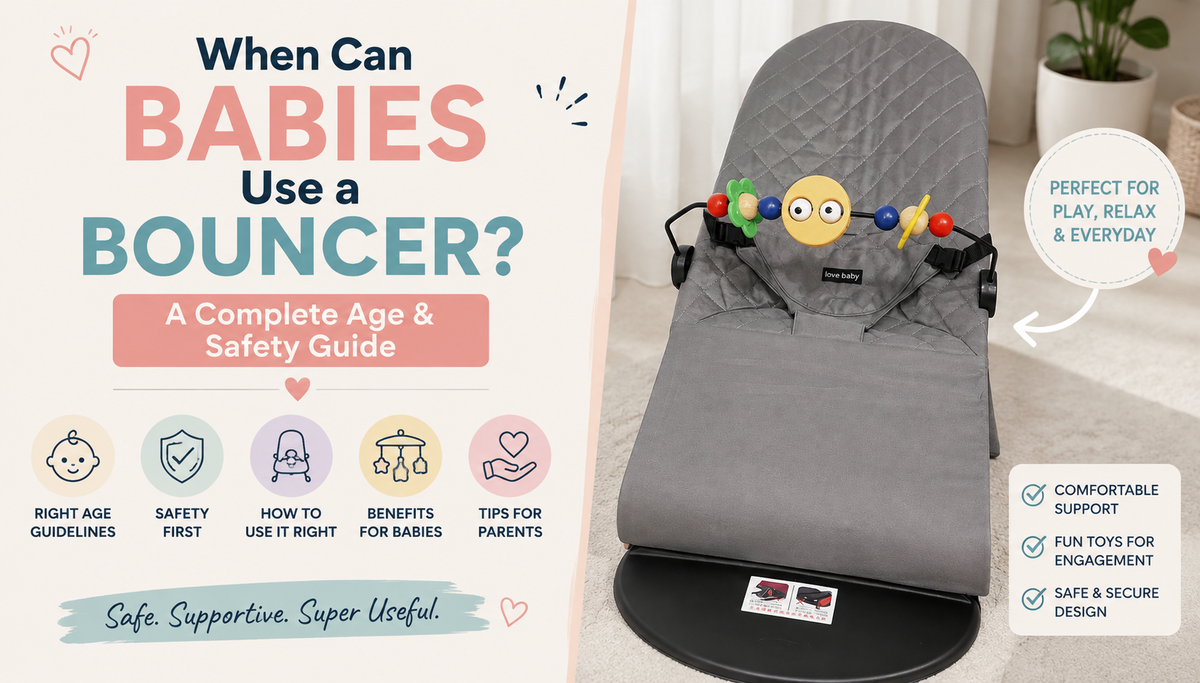
When Can Babies Use a Bouncer? A Complete Age & Safety Guide
Quick answer: Most baby bouncers are designed for use from birth up to around 9–12kg or roughly 6–9 months of age, whichever comes first. Newborns can use a bouncer as soon as you bring them home, provided it has a near-flat recline and full head/neck support but sessions should be short, supervised, and never used as a sleep space.
If you’re a new parent in Australia trying to work out exactly when it’s safe to pop your baby in a bouncer and when it’s time to pack it away, this guide walks through the age ranges, weight limits, safety standards, and everyday habits that matter most.
What Is a Baby Bouncer, Exactly?
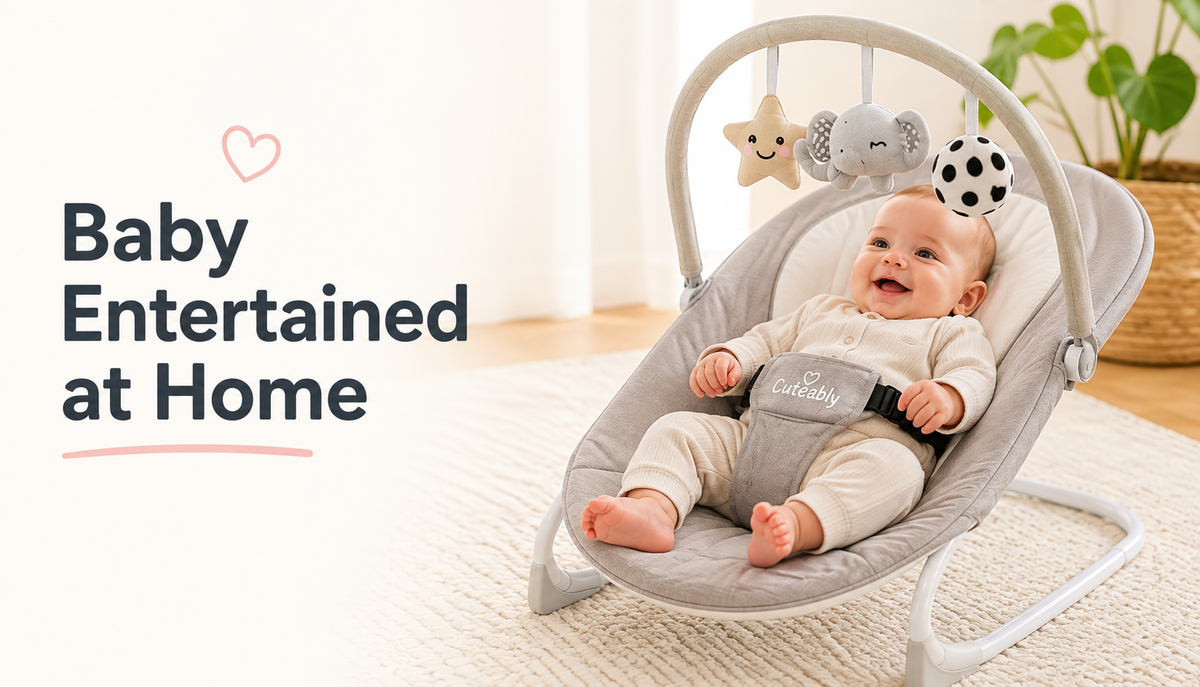
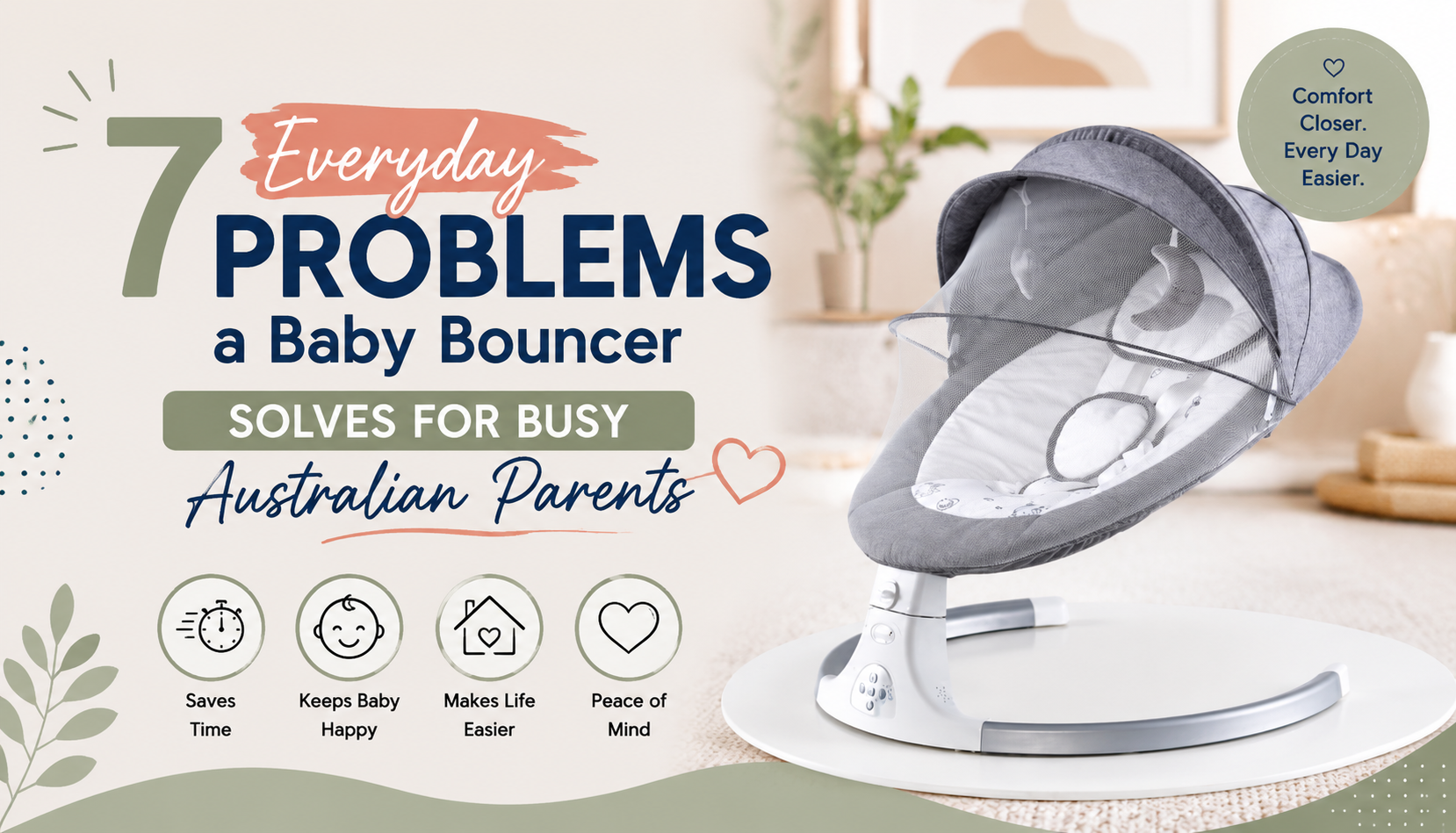
A baby bouncer is a lightweight, portable seat with a padded, gently reclined frame that lets your baby bounce using their own kicks and movements. It’s different from a baby rocker, which has a curved base and rocks from momentum, and a baby swing, which typically uses a motor to create a swaying or gliding motion. Many Australian parents use the terms interchangeably, but if you’re comparing products, this distinction matters – bouncers respond to your baby’s movement, while rockers and swings generate motion on their own.
When Can Newborns Start Using a Bouncer?
Newborns can typically start using a bouncer from birth, as long as the model is designed with newborn use in mind. For babies aged 0–3 months, look for two non-negotiables:
- A near-flat recline position – newborns don’t yet have the neck strength to sit upright
- Full head and neck support, often via a padded insert or newborn reducer
Around the 3-month mark, most babies develop stronger head and neck control, which is when many parents move to a slightly more upright recline and start introducing toy bars or interactive features for stimulation.
Signs Your Baby Is Ready for a Bouncer
- They can (or the bouncer fully supports them to) hold their head steady without flopping
- They’re feeding and settling well in a semi-reclined position
- Your paediatrician hasn’t flagged any reflux, hip, or muscle tone concerns that would rule out inclined seating
If your baby has reflux, many parents find a gentle recline genuinely helpful after feeds but always check with your GP or paediatrician before relying on inclined seating for reflux management, since it isn’t a substitute for medical advice.
How Long Can a Baby Stay in a Bouncer at One Time?
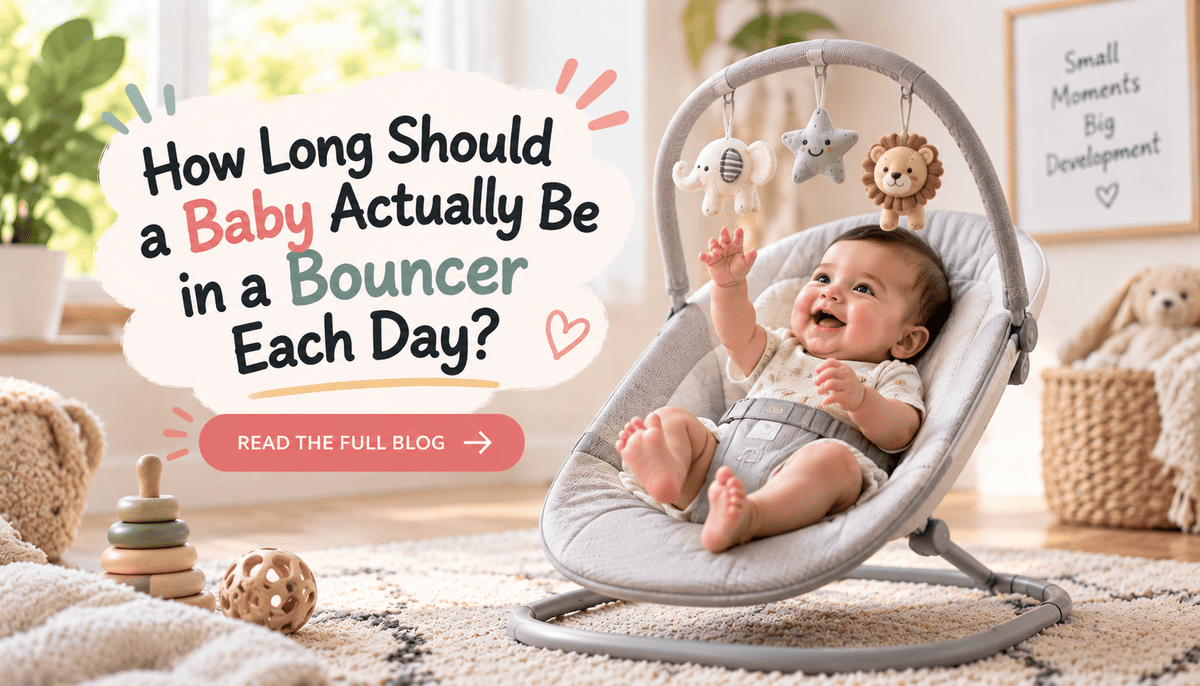
There’s no single official Australian time limit, but the general guidance from child development experts is to keep sessions to around 20–30 minutes, with plenty of tummy time and floor play in between. Extended periods in any semi-reclined seat – bouncers, swings, or car seats can:
- Limit the free movement babies need to build neck, shoulder, and core strength
- Increase the risk of positional plagiocephaly (flat head syndrome) if used too often
- Delay milestones like rolling and independent sitting if it replaces floor time
A simple rule many Australian parents use: if you wouldn’t leave your baby in a car seat for it, don’t leave them in a bouncer for it either.
Can a Baby Sleep in a Bouncer? (Important Safety Update)
This is one of the most searched and most misunderstood questions, so it’s worth being direct: no, a Baby Bouncer should never be used as a place for your baby to sleep, even for a quick nap.
This isn’t just general advice, it’s now backed by updated Australian regulation. Red Nose Australia notes that any inclined surface or product exceeding 7 degrees isn’t considered safe for infant sleep and falls short of the mandatory safety standards for infant sleep products, recommending that babies always sleep on a firm, flat surface instead. This applies to bouncinettes, rockers, and swings whenever a baby is reclined beyond that angle.
This guidance is backed by new law: the ACCC introduced a mandatory safety standard covering the design, performance, and testing of infant sleep products, along with a mandatory information standard requiring clear warnings on infant sleep products and inclined non-sleep products. These standards came into effect on 18 July 2024, with full business compliance required from 19 January 2026 – so it’s worth checking that any bouncer, rocker, or swing you buy today carries current, compliant warning labels.
In practice, this means:
- If your baby falls asleep in the bouncer, move them to a safe, flat cot as soon as it’s safe to do so
- Never leave a sleeping baby unattended in a bouncer, even “just for a minute”
- Always supervise your baby while they’re awake and bouncing
What Age (or Weight) Should You Stop Using a Bouncer?
Most bouncers are designed for use until your baby reaches roughly 9–12kg, or around 6–9 months of age, though the safest sign to watch for isn’t the calendar, it’s your baby’s own development. It’s time to retire the bouncer when your baby:
- Can sit up unassisted
- Starts rolling over or pushing themselves into different positions
- Can pull or climb, even slightly, against the straps or frame
- Reaches the manufacturer’s stated weight limit, which is usually printed on a label under the seat
Continuing to use a bouncer past this point can strain the frame and create a genuine tipping or falling hazard, since the seat is no longer designed to contain a more mobile baby safely.
Australian Safety Standards to Know Before You Buy or Use a Bouncer
Because “bouncer” and “bouncinette” cover a wide range of products, it’s worth understanding how Australian regulators treat them:
- Check for compliance labelling. Products with a mandatory standard must be tested and compliant before sale in Australia, always check the product listing or packaging for this.
- Search productsafety.gov.au before buying, especially for lesser-known or overseas online brands. The ACCC prioritises safety checks in this space because unsafe products are more commonly sold through overseas-based online sellers.
- Use a proper harness every time. Most bouncers use either a 3-point harness (waist plus between the legs) or a 5-point harness (adding shoulder straps), and the harness should be done up correctly on every single use, not just for younger babies.
- Keep it on the floor. Never place a bouncer or bouncinette on a table, bench, or any raised surface, falls from raised surfaces are one of the most common bouncer-related injuries reported to Australian regulators.
- Sign up for recall alerts. The ACCC’s product safety site lets you check current recalls and subscribe for updates on infant products, including bouncers and bouncinettes.
Quick Safety Checklist for Everyday Bouncer Use
- ✅ Bouncer is on a flat floor, never on a table, bed, or bench
- ✅ Harness is fastened correctly every time, even for “just a minute”
- ✅ Baby is supervised and within your line of sight while awake in the bouncer
- ✅ Sessions are kept to roughly 20–30 minutes, with floor and tummy time in between
- ✅ Baby is moved to a safe, flat cot the moment they fall asleep
- ✅ You’ve checked the model against current ACCC recalls and safety standards
- ✅ You’ve stopped using the bouncer once your baby can sit unassisted or roll over
Frequently Asked Questions
Can a newborn use a baby bouncer straight from the hospital?
Yes, as long as the model offers a near-flat recline and firm head/neck support suited to newborns. Many Australian parents set one up before bringing their baby home.
Is it safe to leave a baby unattended in a bouncer?
No. A bouncer should never replace active supervision, and a baby should never be left to sleep in one unattended.
What’s the difference between a baby bouncer and a baby rocker?
A bouncer moves in response to your baby’s own kicks, while a rocker has a curved base that rocks from momentum or a gentle push, the practical difference is in what’s generating the motion.
How do I know if my baby has outgrown their bouncer?
Watch for sitting unassisted, rolling, pulling against the straps, or reaching the manufacturer’s printed weight limit – whichever comes first.
Are baby bouncers covered by mandatory Australian safety standards?
Related product categories, including infant sleep products and inclined non-sleep products, are covered by mandatory Australian standards that took effect in 2024–2026. Always check productsafety.gov.au for the latest requirements before you buy.
This article is general safety information and isn’t a substitute for advice from your GP, paediatrician, or child health nurse, or for the manufacturer’s instructions that came with your specific bouncer.